Wednesday, October 31, 2012

‘Kawang gawa’ uniquely, naturally Filipino written by our Filipina friend Jacqueline Cancio Vega


Kawang gawa’ uniquely, naturally Filipino written by our Filipina friend Jacqueline Cancio Vega

This short article sounds like something I would have written.  Thanks for sharing this with us Jacqueline Cancio Vega.

She writes:

Many years ago on Salcedo Street, Legazpi Village, a woman standing on the curb could not get into her car because of the heavy rain.

Then a man with an umbrella proffered his umbrella so she could get into her car. Tucked safely inside, her hand waved out into the rain with a P20-bill to give the man. The man just walked away and another man watching, just looked incredulous and said “kawang gawa” lang ’yun.”

It was the first time I heard the phrase. I asked my driver Mang Frank what the phrase meant, and he said “gawaing walang anuman, na hindi humihingi ng kapalit, na galing sa puso.” There is no real English equivalent for it and it roughly translates to: “work that expects nothing in return or work from the heart.”

I realized that I had just witnessed a cultural trait that Katrin de Guia, in her book “Kapwa: the Self in the Other,” expounded on—a trait that most urbanized Filipinos who grew up in Manila are not familiar with anymore.

De Guia is the German-born wife of Kidlat Tahimik, the renowned filmmaker.  She took her doctoral studies in UP with Virgilio Enrique, the renowned professor who developed “Sikolohiya Filipino.” She explores the kapwa trait that she says is so uniquely Filipino and is something that Filipinos can offer the world as an alternative to the “me, myself  and I culture” that defines modern life, because our indigenous world-view is so life-enhancing.

SWS surveys have documented the giving trait of the poorer Filipinos as being more generous than the rich. This has been more pronounced with the floods that Tropical Storm “Sendong” caused, with the small folks giving from the little they have versus the rich giving from their plenty. Then too, the Algires of Cabuyao who took the lost Tata Leo in and reconnected him with his family are perplexed why reward was being offered or the Inquirer was interviewing them for “kawang gawa.”

Since that rainy afternoon in Makati, I have explored this kapwa world more and I have realized that our culture is so rich with goodness and wonderful practices that we who grew up in the urbanized, exclusive subdivisions have forgotten or never even knew. We tend to look down on people we consider poor, keeping them away from us with guards at the gate and demeaning people with the frisking practices at malls. Yet the truth is, we “the people who forgot,” are the poorer people. By denying people the respect and dignity due them because we consider them “poor,” we deny our rich culture that has so much to teach us.

—JACQUELINE C. VEGA,
Jacqueline_cancio_vega@yahoo.com


NOTE:  Although some will hate me for saying this it does not change the fact that it is the truth.

There are some Filipinos (Of course Not all Filipinos) who come to the USA and seem to quickly forget where they came from in the Philippines. 

Instead of following this uniquely Filipino custom of ‘Kawang gawa’ they opt to cheat and steal from their Filipino neighbors here.  They may have more material things than they had while living in the Philippines yet that is no reason to lose this cultural trait which truly make them uniquely Filipino.


.

Sunday, October 28, 2012

Why Filipinos Celebrate Festivals

Why Filipinos Celebrate Festivals

Sociable and cheerful, Filipinos love holding Philippine festivals, celebrations that are fun, colorful, exciting and also very meaningful.

Called fiesta or pista in the Filipino language, these festivals are held all year round in many islands of the Philippines for different reasons:

* to give thanks for good harvest or catch
* to mark special events in local history
* to venerate Catholic saints

Whatever the reasons for staging them might be, Philippine festivals are deep-rooted in Filipino culture.

They have been celebrated by many generations of Filipinos.

They have helped to form and seal friendships and camaraderie with one another.

They have also lifted their sometimes battered spirits. They are such a great lift up from the otherwise hard life in the country.

There are so many festivals in the Philippines and the list definitely goes beyond 10.

Still, below is a short list of the top 10 most colorful, exciting, and fun fiestas in the Philippines.


Top 10 Philippines Festivals


1. Ati-Atihan Festival of Kalibo

Why Filipinos Celebrate this Festival


Considered as the mother of Philippine festivals, Ati-Atihan Festival is held yearly in Kalibo, Aklan in Panay Island, Philippines.

It is said to be the precursor of other grand festivals in the Philippines, including the Sinulog Festival of Cebu City and the Dinagyang Festival of Iloilo City.

In this festival, townsfolk dress themselves in aboriginal clothes and deck their bodies with weapons used by the island’s earliest settlers – the Aetas.

Then, they perform tribal dances, moving to the upbeat tune of traditional music as they wind through Kalibo’s streets that are then jampacked with spectators.


When Filipinos Celebrate this Festival:

Third weekend of January each year


2. Sinulog Festival of Cebu City

Why Filipinos Celebrate this Festival


A festival that marks the local people’s transition from paganism to Catholicism, Sinulog Festival of Cebu City is celebrated in a grand way for nine days in January each year.

It is held in honor of Santo Niño, whose icon is carried by many of the festivals elegantly dressed revelers.

It kicks off with a fluvial procession – where an icon of Santo Niño is hosted in a boat adorned with flowers and candles – and ends with the festive Sinulog Grand Parade – a parade of costumed townsfolk gracefully dancing while cleaving to icons of Santo Niño.


When Filipinos Celebrate this Festival:
Third weekend of January each year


3. Dinagyang Festival of Iloilo City

Why Filipinos Celebrate this Festival


A festival that exhibits the local people’s excellent choreography, Dinagyang Festival of Iloilo is a religious-cultural event famous for its Ati-Atihan and Kasadyahan.

Ati-Atihan is a parade of about twenty groups of local people dressed as tribesmen.

Their bodies are covered in soot and they dance to the beat of drums and gongs.

Kasadyahan is a cultural presentation of the province’s early history and the people’s conversion to Catholicism.


When Filipinos Celebrate this Festival:
Fourth weekend of January each year


4. Panagbenga Festival of Baguio City

Why Filipinos Celebrate this Festival


A festival meant to inspire the local people to “bloom” and move forward after a 1990 earthquake left their city shattered, Panagbenga Festival or Flower Festival of Baguio City is also homage to the beautiful flowers that bloom in Baguio, the Philippines’ summer capital.

During this festival, local folks create floats that are ornately decorated with flowers grown in Baguio and its surrounding provinces.

They also dress themselves in flower-inspired costumes, perform traditional dances to the sounds of drums, and parade down the city’s main roads.


When Filipinos Celebrate this Festival:

The entire month of February / parade on the last Sunday of February or first Sunday of March


5. Moriones Festival of Marinduque

Why Filipinos Celebrate this Festival


A Lenten Season celebration that fuses folk history and religious events, Moriones Festival of Marinduque has the local people wearing masks to appear like the Roman soldiers of the biblical times.

This festival pays tribute to Saint Longinus, a commander of a century in the Roman army, who was blind in one eye.

This centurion’s story is reenacted in an elaborate theatrical play staged by the locals.

Many Moriones Festival’s revelers also wear masks during the festival season, roaming the streets and jolting people for good-spirited fun.


When Filipinos Celebrate this Festival:

Good Friday of the Lenten Season of each year


6. Carabao Festival of Pulilan

Why Filipinos Celebrate this Festival


The Carabao Festival of Pulilan in Bulacan is a day of respect for Saint Isidore the Worker – the patron saint of the farmers – and the Filipino farmers’ work companions – the carabaos or water buffalos.

In this festival, carabaos are paraded on the streets and made to kneel at the end of the parade.

The act of kneeling is supposed to replicate a man who knelt before Saint Isidore after finding out by surprise that an angel would help the saint plow the fields.

In the Philippines, carabaos help farmers toil the soil.


When Filipinos Celebrate this Festival:

May 14 and May 15 of each year


7. Pahiyas Festival of Lucban

Why Filipinos Celebrate this Festival


Another festival held in honor of Saint Isidore, who Filipinos ask for intercession when praying for a bountiful harvest, is the Pahiyas Festival of Lucban in the province of Quezon.

This festival is very famous for its decorations, as households try to top one another in decking their houses’ facades with fruits, vegetables and handicrafts, creating an explosion of colors in Lucban’s streets.

Also during this festival, people share foods with one another.

These foods include pancit Lucban, triangulo biscuits, fruits, vegetables, and other local treats.


When Filipinos Celebrate this Festival:

May 15 of each year


8. Peñafrancia Festival of Naga City


Why Filipinos Celebrate this Festival


The Peñafrancia Festival is a religious festival that honors Naga City’s patron saint – the Our Lady of Peñafrancia – whose wooden icon was brought to the province by its devotees all the way from Salamanca, Spain.

It is a nine-day novena that is capped with a fluvial procession, where the image of the Our Lady Peñafrancia is carried in a pagoda down the Naga River and accompanied by hundreds of flower- and candle-bearing faithful Catholics who chant "Viva La Virgen!"


When Filipinos Celebrate this Festival: 
 Third Saturday of September each year


9. Higantes of Festival of Angono


Why Filipinos Celebrate this Festival


Fishermen and townsfolk in Angono, Rizal in the Philippines honor the city’s patron saint – San Clemente – on November 23 of each year during the Higantes Festival.

The saint’s gigantic images, made of recycled and painted paper, are paraded by fishermen wearing colorful clothing and bearing fishnets, boat paddles, and other tools they use for fishing.

These images are as high as 12 feet and as wide as five feet.

The parade navigates the streets of Angono until it reaches the banks of Laguna de Bay.


When Filipinos Celebrate this Festival:

November 23 of each year


10. Giant Lantern Festival of San Fernando


Why Filipinos Celebrate this Festival


Christmas is such a big event for the Filipinos but for the people of San Fernando, it is enormous.

In fact, they like their Christmas lanterns not big but gigantic.

The local people stage the annual Giant Lantern Festival, an awe-inspiring display of over-sized lanterns handcrafted by the locals and made to light up to the tune of lively music and breathtaking fireworks.

So popular is this local festival that San Fernando has earned the title of the Christmas Capital of the Philippines.


When Filipinos Celebrate this Festival:

The Saturday before Christmas Eve of each year

Friday, October 26, 2012

Think you know the common Filipino condiments?


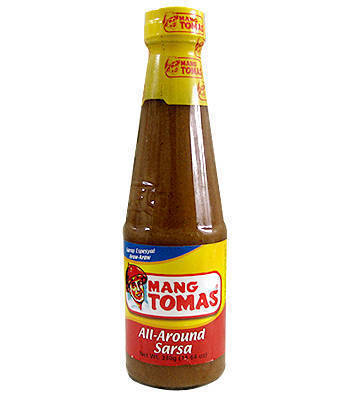
Filipino Condiments Philippine condiments often accompany Filipino dishes for those who want stronger flavor.  The following is a list of some of these Philippine products, their local names, and pictures.  


Atsara – pickled vegetables, usually papaya but there are also other versions like one using bitter gourd (ampalaya)


Banana ketchup 

Bagoong / Ginamos fermented salted fish usually prepared to a pasty consistency


Mackerel / Anchovy sauce (bagoong balayan, named after the town of Balayan, Batangas)  


Salted Anchovies (bagoong monamon / bagoong dilis / monamon dilis)


Salted Bonnetmouths (bagoong terong) [not sure exactly what fish species is used]


Salted Ziganids (bagoong padas) – usually small jarred fish sold still relatively whole and not ground up; probably refers to rabbitfish (family Siganidae)


Buro - again pickled, salted or fermented but applying especially to salted green unripe mangoes (burong mangga); also refers to a Pampangan preparation that has fish or shrimps mixed with rice and salt left to ferment and then days later sautéed with tomatoes, onions, and garlic


Calamansi / Calamondin / Philippine Lime (kalamansi


Chicken oil


Chili (sili) – often added to soy sauce or vinegar


Crab paste / Crab fat / Crab roe (taba ng talangka or aligue)     


Ensalada – in Spanish salad, but in the Philippine context can also often refer to vinegared vegetables used as a relish which pretty much makes it similar or the same as atsara but the term is more likely to be applied to eggplants and cucumbers as in ensaladang talong and ensaladang pipino 


Fish sauce (patis)


Hot sauce


Lechon sauce (sarsa


Patismansi – fish sauce mixed with calamansi juice


Shrimp paste (bagoong alamang)  


Soy sauce (toyo)


Sweet chili sauce  


Tomato (kamatis) fresh chopped; also salted and boiled in water to make something akin to and used like tomato water 


Toyomansi – soy sauce mixed with calamansi juice  


Vinegar (suka) – those found in Filipino markets are usually a product of sugar cane but some are also derived from coconut; it's often mixed with chili, garlic, and possibly other spices and herbs to make spiced vinegar (sinamak) or combined with chili, garlic, soy sauce, fish sauce or some combination thereof to make a dipping sauce (sawsawan) at the dining table 


Wednesday, October 24, 2012

10 Unique Things of the Philippines CLICK here to see them. Now you know my favorites. What are yours?

10 Unique Things  of the Philippines

1. The People -=- Generally, Filipino people will go out of their way to help a stranger or a visitor. Yes this is not always the case and certain areas are to be avoided but I have experienced incredible service in shops and restaurants there.

2. The Weather -=- Despite hating the high humidity, I also love it.  I prefer it so much more than shoveling snow.

3. The Food -=- I enjoy most of the traditional Filipino foods, with only a few exceptions.

Lechon Manok (roast Chicken on a spit) is one of my favorites.

Filipino baked goods are yummy yummy-yummy too.  I am happy to try anything and have yet to come across something baked I dislike. Also, the Filipino spin on western food is quite nice too, Fried Chicken with Rice and Gravy is very popular in the Philippines and I can see why.

Spaghetti sauce is sweet but still tomato based and very nice... Sarap-Sarap :-)))

4. The Laid back Attitude -=- This also makes for Filipino Time which is something I dislike.

There is nothing like sitting down with a group of Filipino's and simply relaxing is something we all should do.

5. The Scenery -=- If you have never been to the Philippines it has some of the most amazing scenery.  I could go on and on and on about all the wonderful things to see and do in the Philippines.

6. The Family and Friend Orientations -=- Despite the fact that Filipinos in the USA do not seem to unite for a common goal, in the Philippines it is very different and families work together.

Distant relatives who have made a lot of money will sponsor a cousin or similar to go to college or some other course to better themselves.

Overseas workers pay for the education of one or more relatives back home and this attitude carries on with a "Pay It Forward" kind of attitude.

Neighbors remain friends and will always ask about how they are doing and regularly meet up for meals and drinks. Something lacking in the USA.

7. Meal Time -=- Meal are a family gathering where everyone comes together around the table and food is family style.  Food is put in the middle of the table for people to scoop up what they want.  Pleasant conversations are as much a part of the ritual of meal times as is the food.  While growing up in Pennsylvania this was a regular practice.  Unfortunately in the USA this is something we as a nation have moved away from yet the practice is alive and well in the Philippines.  In the USA we should strive to return back to this instead of the current TV dinner type of experience!

8. The Prices -=- I can have a quick yummy meal for just a few US dollars!

As a gift I bought a friends daughter a baby walker and it costs about a third of what a similar unit in the USA would cost.

Drinks cost very little too.  And, for a westerner this gives us a few extra pesos for tips which makes us seem nicer in the eyes of those serving us.

9. Twelve Hours of Sunlight -=- Being near the equator there is roughly 12 hours of sunlight every day.

This makes for a graceful awakening some time before 6am and you quickly adapt to waking and sleeping naturally and not relying on alarm clocks.

And of course 12 hours of Sunlight means you have plenty of time to enjoy whatever it is yo plan to do that day!

10. Love of Music -=- Every Filipino loves music and makes time to listen to music every day (or at least every Filipino that I know does).

So on my daily travels I will hear music in the malls, coming out of bakeries, stores, tricycles, jeepneys, cars and trucks. Basically you hear music anywhere you go in the Philippines.

Now you heard my ten things.  What are yours?


====

If you like this and other Filipino related topics, food,  humor and videos be sure to visit us on Facebook at Dr. Dave's Filipino Scene.

Dr. Dave's Filipino Scene promotes cultural diversity of Filipinos around the world uniting them thru humor, fun, food & traditions.  Hope  you visit our new Fan page.

Here is a link to visit us:  (You may need to copy and paste this link into your browser)

http://www.facebook.com/pages/Dr-Daves-Filipino-Scene/159834104096974

Be sure to tell your friends.  We hope to see you there.

Salamat:-)))

-=-Dr. Dave-=
.

Tuesday, October 23, 2012

How many Exotic Foods of the Philippines do you eat? I have eaten all but two on this list... (Click) to see the pics

I have eaten all but two on this list... How many of these Exotic Foods of the Philippines do you eat? (Click) to see the pics

Every country has their share of exotic foods served on the table with some even known as the country's specialty. The Philippines is no different.  Here are a few of those I found.

There are so many Filipino exotic foods that are truly unique and delicious.  Below you will find some of the many Filipino exotic foods.

Some of them have a strange appearance and look weird.  There are some people that dive right in and eat them while others find them not acceptable or not appropriate to eat. Personally, I fall somewhere in between.

That being said... If you follow the adage "don't judge the book by its cover", then you will able to eat each of these without hesitation.

This saying really applies to unique exotic foods of the Philippines.  I have eaten all but two on the following list.  And for me most of it was overcoming the mental challenge involved in getting it into my mouth.  And "YES," I ate the balut.

BALUT


Balut is a fertilized duck (or chicken) egg with a nearly-developed embryo inside that is boiled and eaten in the shell.

Balut eggs are believed to be an aphrodisiac and considered a high-protein, hearty snack.

Balut is sold primarily by street vendors in the regions where they are available.


SOUP NUMBER 5


Soup Number Five, is a soup made from bull's testicles or penis.

Like balut, it is believed to have aphrodisiac tendencies that makes people say it is better than spending money on Viagra..

GINATAANG KUHOL


The French call "kuhol" by the name  "escargot". Kuhol or escargot is an edible snail. Guinataang Kuhol is a favorite appetizer in Filipino restaurants. It is also a popular pica-pica (finger food) that goes well with cold beer. Ginataang kuhol is a spicy dish.


 DINUGUAN


Dinuguan is a Filipino savory stew of blood and meat (typically stomach, intestines, ears, heart and snout) simmered in a rich, spicy dark gravy of pig blood, garlic, chili , and vinegar.

TAMILOK


In Palawan and Aklan in the Philippines, the woodworm is called tamilok  and it is eaten as a delicacy there.

Tamilok is prepared as kinilaw—that is, raw (cleaned) but marinaded with vinegar or lime juice, chopped chili peppers and onions, a process very similar to ceviche. The taste and texture has been compared to oysters and clams.


====

If you like this and other Filipino related topics, food,  humor and videos be sure to visit us on Facebook at Dr. Dave's Filipino Scene.

Dr. Dave's Filipino Scene promotes cultural diversity of Filipinos around the world uniting them thru humor, fun, food & traditions.  Hope  you visit our new Fan page.

Here is a link to visit us:  (You may need to copy and paste this link into your browser)

http://www.facebook.com/pages/Dr-Daves-Filipino-Scene/159834104096974

Be sure to tell your friends.  We hope to see you there.

Salamat:-)))

-=-Dr. Dave-=
.

Going Home to Pilipias to Visit. I am not Rich by our Filipino friend Jojie C from Kidapawan,Philippines

Going Home to Pilipias to Visit.  I am not Rich
by our Filipino friend Jojie C from Kidapawan,Philippines

What I find annoying is that people specially residing in Philippines, see us folks returning to Philippines for a visit as rich folks. They would always think that we have money! They would try and take advantage of us by jacking up the prices, or in case of friends and relatives, they will ask for some money. Or we will get a phone call or an email or text, asking for a sum of money because they need to buy this or that or need a big lump sum of money for some emergency and they will always than not say, it’s only this much. Er.. Only this much?

Traveling

Well in truth, we do have some money, when we are traveling. We saved up months or in our case—those like me with average income, years. We save a little bit each time we get paid over time so we have some spending money to spend in Philippines. It is not because we are rich, it’s because, we manage our money by saving it. So it seems that when we do get to Philippines, we have loads of money to spend!

Asking for money

The other part, that is common too, is this—and it often happens when you happen to be in Philippines, one of your relative will borrow some money. For whatever reasoning they need the money for, they will ask you whilst you are on holiday.

Think about this for a second. When we travel, our money is already allocated. Even though, we have not yet spent it, it is already geared for future travel expenses. Unless of course, you factor in these kind of requests in your travels to Philippines then I suppose you would be OK and not get caught. Most of us though, only caters for what we might be spending on. We really only have pocket money and other travel expenses with us. We do carry credit cards for emergencies and perhaps have some more money in our bank, in our savings account, which is our savings or other unmet expenses or other emergencies—but not for requests by relatives or being priced higher by vendors because they somehow smelt you have been overseas.

Currency differences

As I traveled in Philippines just six months ago, my new friends and I were talking about income and expenses and a taxi driver in Manila who could smell money from me, even though I was talking in Tagalog (the Philippine national language) and not at all boasting where I was from. Heck I didn’t’ even mention anything about overseas, until he asked me where in America was I from. The gist of the story was this, she and the others thought I was rich, after converting what I normally earn per financial year and converted to Philippine peso. When we converted my income, it ran into millions of pesos. Average yearly income for Filipino workers is about 120,000.00 pesos—based on 10k monthly earning. I know too, that people are getting paid far less than that. Learning that my income runs into millions of peso value, would be seen as a rich man right? I would think so too! But it all ends there though. As I explained, with the big currency conversion gap from American dollar to Philippine peso, the standards of living and costs of living in the USA is expensive. I further explained, what some of the costs that I incur whilst living in the USA and told them, that if they thought, the few millions I earned after converting to the Philippine currency is rich, I thought, to make them understand, I would also convert my basic expenses to peso and perhaps, they can understand it that way. Indeed it worked! The taxi driver—who by the way ripped me off anyway, by not giving me my change from my taxi fare—I gave him 500 pesos for about 300 pesos taxi fare. He said to me during this conversation that, we are in a way, in the same position, living pay check per pay check.

Educating the few

I have always known, this to be a fact. Whenever somebody arrives from overseas, Filipinos would think they are loaded with money. I have always tried to explain to them that it isn’t always the case! We are just average folks living in a different country and spending our money here because it’s cheaper in currency value and as such our money would last longer. I have also tried explaining in other ways, that they should not see us “balik bayans” as $$$$. But most of them failed. Until, I started explaining everything in peso value.

Though, I hope, I won’t have to have a conversations like these again next time I visit Philippines. I also know this would be a mere impossibility, because somebody will eventually ask. This time around though, at least, I can explain it in a more logical terms that an average Filipino worker can understand.


====

If you like this and other Filipino related topics, food,  humor and videos be sure to visit us on Facebook at Dr. Dave's Filipino Scene.

Dr. Dave's Filipino Scene promotes cultural diversity of Filipinos around the world uniting them thru humor, fun, food & traditions.  Hope  you visit our new Fan page.

Here is a link to visit us:  (You may need to copy and paste this link into your browser)

http://www.facebook.com/pages/Dr-Daves-Filipino-Scene/159834104096974

Be sure to tell your friends.  We hope to see you there.

Salamat:-)))

-=-Dr. Dave-=
.

Thursday, October 18, 2012

Do you recall playing Patintero/Sugbuhanon/Tubiganay in the Philippines?

Patintero/Sugbuhanon/Tubiganay - This Filipino game can takes hours to play, is lots of fun and it's good exercise for the young or young-at-heart.Teach this game to your children and keep the Filipino culture alive.


This is a popular Filipino game that seems to be well-loved by Filipinos
throughout the Philippines.

I have heard this refered to by different names in the Philippines yet the game is the same.   Some  call the game "Patintero"  others "Sugbuhanon" and still others refer to it as "Tubiganay".

Perhaps the Tagalog name came from a Spanish word "tinte" meaning "tint" refering to the lines. I can see why those from Cebu and the Visayas call it "tubiganay" because in the dusty fields where it is being played, oftentimes, water is used to make the lines that is crucial to holding this game.

 No matter what you call it, Patintero, Sugbuhanon or Tubiganay, this game of speed, agility, team work and being able to bluff is a fun part of Filipino culture.

On hot, lazy summer afternoons, a few pails of water on a dusty patch of land, add a few neighborhood kids and you’ve got stiff competition going on!  

What you need: even ground that you can write on using chalk or charcoal, or a patch of land that you can create lines using water or mark using a pointer stick.

Some soil is really dark and loamy so instead of adding water or writing with chalk,
you can use a stick to make shallow grooves in the soil for your lines.

Players: minimum number of 4 - 6 children, more would mean more fun!

The paying field:

Draw the lines like below in figure 1.  On smooth concrete or asphalt ground you can use chalk to make the lines.  If playing in the sand on on soft dirt you can use a stick to draw the line. 


The more players the better.  If there are more players, you must add more lines.

The more lines you have, the more difficult and the longer it takes to finish.  With more people the game just seems that much more exciting!


The Game:

Players make up two teams of even number (i.e. 2 against 2 or 3 against 3) They can use “maalis-alis” to make the groupings.

Then team leaders can use Jack en Poy to decide who will play first.

The winning team gets to run first while the losing team gets to guard the lines. The team leader is on the first line and he has the “power” to also run along the middle line to catch an opponent.


The running team use all speed and bluffing strategies to get through the lines and back earning them a total points relative to how many players were able to enter the lines and come back to the starting point.

When one member of the running team is tagged, then the runners now become the line guards and the guards now take turn as runners.


This Filipino game can takes hours to play, is lots of fun and it's good exercise for the young or young-at-heart.

Here is a link to a video clip showing children actually playing the game with a brief tutorial.

http://youtu.be/jgjgST2F8-s
So what are you waiting for?  Plan to teach this game to your children and keep the Filipino culture alive.


====

If you like this and other Filipino related topics, food,  humor and videos be sure to visit us on Facebook at Dr. Dave's Filipino Scene.

Dr. Dave's Filipino Scene promotes cultural diversity of Filipinos around the world uniting them thru humor, fun, food & traditions.  Hope  you visit our new Fan page.

Here is a link to visit us:  (You may need to copy and paste this link into your browser)

http://www.facebook.com/pages/Dr-Daves-Filipino-Scene/159834104096974

Be sure to tell your friends.  We hope to see you there.

Salamat:-)))

-=-Dr. Dave-=
.