Showing posts with label Food. Show all posts
Friday, October 26, 2012
Think you know the common Filipino condiments?
Filipino Condiments Philippine condiments often accompany Filipino dishes for those who want stronger flavor. The following is a list of some of these Philippine products, their local names, and pictures.
Atsara – pickled vegetables, usually papaya but there are also other versions like one using bitter gourd (ampalaya)
Banana ketchup
Bagoong / Ginamos – fermented salted fish usually prepared to a pasty consistency
Mackerel / Anchovy sauce (bagoong balayan, named after the town of Balayan, Batangas)
Salted Anchovies (bagoong monamon / bagoong dilis / monamon dilis)
Salted Bonnetmouths (bagoong terong) [not sure exactly what fish species is used]
Salted Ziganids (bagoong padas) – usually small jarred fish sold still relatively whole and not ground up; probably refers to rabbitfish (family Siganidae)
Buro - again pickled, salted or fermented but applying especially to salted green unripe mangoes (burong mangga); also refers to a Pampangan preparation that has fish or shrimps mixed with rice and salt left to ferment and then days later sautéed with tomatoes, onions, and garlic
Calamansi / Calamondin / Philippine Lime (kalamansi)
Chicken oil
Chili (sili) – often added to soy sauce or vinegar
Crab paste / Crab fat / Crab roe (taba ng talangka or aligue)
Ensalada – in Spanish salad, but in the Philippine context can also often refer to vinegared vegetables used as a relish which pretty much makes it similar or the same as atsara but the term is more likely to be applied to eggplants and cucumbers as in ensaladang talong and ensaladang pipino
Fish sauce (patis)
Hot sauce
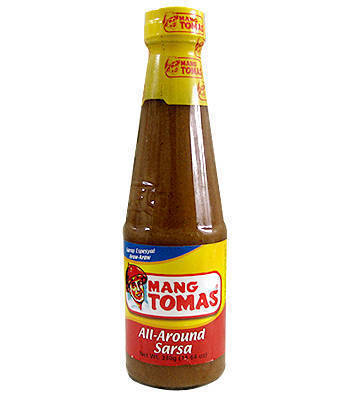
Lechon sauce (sarsa)
Patismansi – fish sauce mixed with calamansi juice
Shrimp paste (bagoong alamang)
Soy sauce (toyo)
Sweet chili sauce
Tomato (kamatis) – fresh chopped; also salted and boiled in water to make something akin to and used like tomato water
Toyomansi – soy sauce mixed with calamansi juice
Vinegar (suka) – those found in Filipino markets are usually a product of sugar cane but some are also derived from coconut; it's often mixed with chili, garlic, and possibly other spices and herbs to make spiced vinegar (sinamak) or combined with chili, garlic, soy sauce, fish sauce or some combination thereof to make a dipping sauce (sawsawan) at the dining table
Sunday, August 5, 2012
Hmmm When I say "Eat-all-you-can" what sorts of feelings does this conjure up for you?
Hmmm When I say "Eat-all-you-can" what sorts of feelings does this conjure up for you? What do you think of when you hear this familiar term? Do you get hungry like I do? Did you all of the sudden get hungry just with the thought of this? :-)))
If you are not familiar with the term I shall explain.
In the Philippines buffet restaurants are called "Eat-all-you-can" restaurants.
Eat-all-you-can restaurants are popular among barkadas (a Filipino term meaning a group of friends) and families who are looking for a food adventure. These are great for people who like to eat a lot, like lots of variety, don't like to dress up, and they will be popular with the kids, too.
Like buffet restaurants, in the USA, "Eat-all-you-can" restaurants are made up of long tables filled with salads, soup, rice, Pinoy dishes, Chinese foods and several other kinds of dishes, fruits and desserts.
So the next time you are feeling hunger pangs and not sure what you feel like eating visit an "Eat-all-you-can" restaurant and have your choice of foods and deserts.
Maybe Lucy and I will see you at one of them. :-)))
Thursday, July 26, 2012
FILIPINO FOOD 101: WHEN COOKING FILIPINO FOODS IN THE USA ARE PINOY INGREDIENTS A SECRET? [ CLICK THIS ]
FILIPINO FOOD 101: WHEN COOKING FILIPINO FOODS IN THE USA ARE PINOY INGREDIENTS A SECRET?
If NOT, why are those ingredients so hard to find? The secret is out - allow me share what I have learned.
Did you ever get a Filipino Recipe from someone in the Philippines, you then go to the store to buy the ingredients only to get frustrated because you cannot find those ingredients here in the USA? You are not alone and it has happened to me too.
Many years ago, before Lucy and I were married, I purchased a Filipino Cook Book at the National Book Store in Cebu. I already knew that Lucy did not know how to cook so my plan was simple. While immigrations is processing her paperwork I would learn how to prepare some of her favorite dishes and when she arrives in the USA I would already know how to cook her favorite foods for her.
Thinking ahead, I even had her mark her favorite foods in this cook book before I returned to Arizona. I was excited and knew I was ready.
In theory this idea sounded good yet I can still remember my frustration, when I got home and started making a grocery list so I could practice cooking the first recipe. What a nightmare....
I remember taking my list of ingredients to Frys, my local grocery store and I could not find them. I was not off to a good start and began getting frustrated. Next I went to Bashas Grocery Store and they did not have them either. And I even went to Lee Lee's Oriental Market. Not there either. What the heck? Ay Naku, learning to make Lucy's favorite Filipino foods was going to be more of a challenge than I first thought.
You see, I was a bit confused about the ingredient names.
In the cook book and in the Philippines they called an ingredient by one name and in the United States we called that same ingredient by another name. How confusing.
Thank God I knew some Filipina here who know how to cook and they helped me prepare this list. Since we first made this list it has grown and grown. Today, after 11 years, I will share this list with you.
This list has helped me over the years and I hope this will prevent any of you from being confused about what the Filipino ingredients are called in English.
Here are some Filipino or Tagalog words used in Food Recipes and their corresponding English translation, definition, or meaning.
ON THE LEFT: I provided some popular Filipino ingredients
ON THE RIGHT: I put what they are called here in the USA.
I hope this list helps you as it helped me.
Achuete or Achiote – Annatto seeds (red seeds used to color food)
Adobo - braised meat; cooked over slow fire using vinegar, water, and black peppercorn, with soy sauce for color and saltiness, or with achuete for red color; may be considered the national food in the Philippines
Alimasag - salt water crab; blue crabs
Alugbati – Malabar Night Shade or Spinach
Ampalaya – Bitter melon or Bitter gourd
Asin – Salt
Baboy – Pork or Pig
Baka – Beef
Bagnet - Crispy deep fried pork belly - great for adding to pinakbet.
Bagoong alamang – A condiment made from fermented salted fish or shrimp paste
Bagoong isda – Fermented salted anchovies
Baguio beans – Green beans
Banana leaf - the leaf of the banana plant that has many uses in Filipino cooking such as wrapping food, as cover and underliner, or for packaging.
Bangus - milkfish, considered the national fish of the Philippines
Bawang – Garlic
Bihon – Rice noodles
Bigas - Rice
Binagoongan - cooking with bagoong
Buko – Young coconut
Bulalo – Beef shanks
Buntot ng baka - Ox tail
Calamansi – Filipino lime, a Philippine citrus fruit and souring agent “Lemon” is the best substitute
Canton – Egg noodles
Chicharon – Pork rinds
Chorizo - general name for Spanish sausage
Dahon ng gabi - taro leaves
Dahon ng sili - chili leaves
Daing - dried fish or picked fish, usually cut butterfly-style
Dilis – Anchovies
Dugo – Pork, Beef, and Chicken blood used for cooking
Estofado - Braised in soy sauce, vinegar, and sugar
Gabe – Taro = Root or Leaves
Galapong - Rice dough made of glutinous rice
Galunggong – Round Scads or Mackerel Scads
Gata – Coconut milk obtained from the pressing of grated mature coconut meat mixed with water
Giniling na baboy - Ground pork
Gulaman - Gelatin
Halayang ube - purple yam jam
Hamon – Ham
Hipon – Shrimp
Hugas bigas - water obtained from washing rice grains and used as broth base for sinigang
Inihaw - charcoal-grilled or broiled
Isda – Fish
Itlog na maalat - Salted duck egg (related to Balut)
Kabute – Mushroom
Kakang gata - pure coconut cream obtained from the first pressing of grated mature coconut
Kalabasa – Pumpkin or Squash
Kangkong – Water Spinach or Swamp Cabbage
Kamias - bilimbi, green acidic fruit from the cucumber tree used for souring dishes
Kamatis – Tomato
Kambing - Goat
Kamote – Sweet potatoes or Yam
Kamoteng Kahoy – Cassava or Yuca root
Kangkong - morning glory, swamp cabbage, water spinach
Kaong - sugar palm seed
Kesong puti - white cheese made from carabao or water buffalo milk
Kinchay / Kintsay – Celery or Chinese Leeks
Kinilaw - cooked by steeping in vinegar
Kutsay – Leeks
Labanos – long white cylindrical radish native to Asia – Daikon
Labong – Bamboo shoots
Langka – Jackfruit
Latik - coconut curd, the brownish residue obtained after oil is extracted from boiled coconut milk
Laurel leaf – Bay leaf
Lechon - roast meat usually spit-roasted
Lechon manok - roast chicken
Lechon sauce - sauce served with roast pork made of finely ground pork liver
Librilyo - ox tripe
Lomo – Beef loin
Lumpia - spring roll
Lumpia wrapper - crepe usually made of rice flour to wrap spring roll with
Luya – Ginger
Macapuno - coconut sport, a variety of coconut that has soft fleshy meat when ripe
Malagkit - sticky rice, glutinous rice
Malunggay leaves – Horseradish leaves
Manok – Chicken
Miki – Egg noodles
Miso - fermented soybean paste
Misua or Miswa – Vermicelli noodles
Misu – Soybean paste
Mongo – Mung beans
Mustasa – Mustard
Nata de coco - coconut gel usually packed in heavy syrup
Niyog - Mature coconut
Pansit or Pancit – Noodles
Pancit molo - wonton soup that originated from Molo, Iloilo, a town in the Visayas region, Panay island in the central Philippines
Paminta – Peppercorns (Black pepper is the dried unripe berries and white pepper (ground) is from the ripe berries of the same pepper vine)
Patani – Lima beans
p\Pandan - fragrant screw-pine
Pastel - pot pie
Pata - animal trotter
Patatas – Potatoes
Patis - Fish sauce
Patola – Zucchini
Pechay / Petsay – Bok-choi, Bok-choy, Chinese cabbage
Pesa - stewed in ginger, garlic, and onion
Pigue - pork rump
Pimiento – A red pepper typically found in pickled version
Pinipig - rice crispies, immature rice, roasted and pounded until the grains are flattened
Pipino – Cucumber
Pusit – Squid or Calamari
Queso de bola - edam cheese shaped like a ball and imported from Holland
Repolyo – Cabbage
Saba - cooking banana variety
Sago - starch from the pith of the sago plant processed into flour, meal or pearl-like globes, tapioca pearls
Sampalok – Tamarind
Sayote – Chayote, a kind of tropical squash
Saluyot – Jute
Shrimp juice - juice from heads and shells of shrimps extracted by pounding, adding a little water then straining
Siling labuyo - bird's eye chili
Siling pangsigang, siling haba - green finger pepper, long green chili that is mildly hot, literally chili for sour soup, long chili
Sinangag - fried garlic rice
Singkamas – Jicama or Turnip
Sitao or Sitaw – String beans or Yard-long bean
Sibuyas – Onions
Sigarilyas – Winged Beans
Siling Labuyo – “Thai peppers” or “Birds Eye Chili”- originated from Thailand (“Very Hot!”)
Siling Mahaba – Finger peppers
Sinigang powder - Instant powder with dried sour soup ingredients using tamarind, guava, or kamias as base
Sotanghon – Transparent bean noodles, also known as cellophane noodles
Sugpo – Giant tiger prawn
Ssuka - Vinegar made from sugarcane, coconut, or nipa juice
Sukang sinamak - Vinegar dip with garlic, ginger, and chili from Iloilo, Visayas region
Tadyang ng baka - Beef ribs
Tagiliran - Beef sirloin
Tahong - Mussels
Talaba – Oysters
Talong – Eggplant
Tambakol - tuna
Tanglad – Lemon grass
Tanguige - wahoo, mackerel
Tapa - beef jerky, processed beef slices flavored with garlic, salt, soy sauce, sometimes with sugar
Tausi – Black soy beans, salted and fermented.
Togue – Bean sprouts
Tokwa – Tofu
Torta - omelet
Toyo - soy sauce
Tulya – Freshwater clams
Ubod – Hearts of palm
Upo – Bottle gourd
Wansuy – Cilantro
Mga di-binagong pangalan – Unchanged names! :-)))
Asparagus
Broccoli
Carrots
Cauliflower
Okra
Papaya
Soya
***** IF YOU FIND ANY MISSING FROM THIS LIST PLEASE SHARE THEM WITH ME.
SALAMAT
====
If you like this and other Filipino related topics, food, humor and videos be sure to visit us on Facebook at Dr. Dave's Filipino Scene.
Dr. Dave's Filipino Scene promotes cultural diversity of Filipinos around the world uniting them thru humor, fun, food & traditions. Hope you visit our new Fan page.
Here is a link to visit us: (You may need to copy and paste this link into your browser)
http://www.facebook.com/pages/Dr-Daves-Filipino-Scene/159834104096974
Be sure to tell your friends. We hope to see you there.
Salamat:-)))
-=-Dr. Dave-=
.
Monday, July 23, 2012
Eating balut the first time...Balut is not really an egg and not really duck, but somewhere in between by Dr. Dave!
Eating balut the first time...Balut is not really an egg and not really duck, but somewhere in between! by Dr. Dave
This was the day I finally ate balut.
Nick Helm (the Food Truck Junkie), Brian Webb and I along with a one other ate BALUT for the first time in front of a television audience. As both, the Eat St. TV crew (Canadian Food Network) and Taryn Rosenbalm Jeffries (writer for Phoenix Bites) were filming our Balut eating experience.
For those not familiar with balut. Balut is not really an egg and not really duck, but somewhere in between!
Balut are fertilized duck eggs that are at the stage of development where there is a nearly developed embryo inside.
Now doesn't that description make you want to run out to the Hey Joe Filipino Food Truck and get one for yourself?
Of all the Filipino foods I have experienced over the last 20 years, I think balut might just be the yuckiest looking of them all.
When I first attempted to eat balut, over 20 years ago, I just could not get it past my lips and into my mouth. Today was different.
Although I have no hesitation when it comes to eating eggs, ducks or chicken, balut just pushes all of the ‘eww’ buttons in my brain.
Before eating ... the balut eggs are boiled like a traditional hard boiled egg. And when it actually came down to eating it the balut was like eating a hard boiled egg. Well sort of.
Brian described that we break open the larger side of the egg shell. I sprinkled a little salt on top followed by a little spicy vinegar. Then we each drank the juice inside first.
So far so good. Not too bad.
Then, after the camera crew took lots of pics, revealing the duck fetus inside... Then we ate the rest.
Thinking back to that experience...
Although I know I removed all of the shell before eating it. When I put it into my mouth it felt as if there was still a little piece of the shell still there. That being said I must assume what I felt inside my mouth was the duckbill.
I am curious as to what all of our faces looked like, on camera, as we put this into our mouth. We will just have to wait until it shows on tv to know for sure.
No longer do we have to wait to see our faces as Taryn Rosenbalm Jeffries writer for Phoenix Bites video taped the television crew filming us. She shared her video of the experience with us. Here is a link to her video.
Link to her video on Facebook:
http://www.facebook.com/photo.php?v=10151061516087222&set=vb.814672221&type=2&theater¬if_t=video_comment_tagged
This describes my Balut eating experience.
-=-Dr. Dave-=-
***Taryn Rosenbalm Jeffries -=- Thanks for sharing this video with us ***
The above pic shared with us by Phoenix Bites.
Here you can see the back of the girl from Eat Street Food Network in Canada filming us.
Be sure to visit the following website/Facebook Pages.
Hey Joe Filipino Food Truck
Facebook: http://www.facebook.com/pages/Hey-Joe-Truck/171382589570245
Website:http://HeyJoeTruck.com
Email: Brian@HeyJoeTruck.com
Twitter: http://twitter.com/#!/HeyJoeTruck
Food Truck Junkie
Facebook: http://www.facebook.com/FoodTruckJunkie
Website: http://www.thefoodtruckjunkie.com/
Email: foodtruckjunkie@hotmail.com
Twitter: http://twitter.com/#!/foodtruckjunkie
Eat Street Tv Show -=- Schedule Tuesdays on Cooking Channel US (8pm) / Fridays on Food Network Canada (9pm)
Facebook: http://www.facebook.com/EatSt
Website: http://eatst.foodnetwork.ca/
Phoenix Bites:
Facebook: http://www.facebook.com/PhoenixBites
Website: http://www.PhoenixBites.com
Email: info@phoenixbites.com
Twitter: http://twitter.com/#!/PhoenixBites
Dr. Dave's Filipino Scene.
Facebook: http://www.facebook.com/pages/Dr-Daves-Filipino-Scene/159834104096974
Email: Filipino.Scene@yahoo.com
Twitter: http://twitter.com/#!/FilipinoScene1
.
This was the day I finally ate balut.
Nick Helm (the Food Truck Junkie), Brian Webb and I along with a one other ate BALUT for the first time in front of a television audience. As both, the Eat St. TV crew (Canadian Food Network) and Taryn Rosenbalm Jeffries (writer for Phoenix Bites) were filming our Balut eating experience.
For those not familiar with balut. Balut is not really an egg and not really duck, but somewhere in between!
Balut are fertilized duck eggs that are at the stage of development where there is a nearly developed embryo inside.
Now doesn't that description make you want to run out to the Hey Joe Filipino Food Truck and get one for yourself?
Of all the Filipino foods I have experienced over the last 20 years, I think balut might just be the yuckiest looking of them all.
When I first attempted to eat balut, over 20 years ago, I just could not get it past my lips and into my mouth. Today was different.
Although I have no hesitation when it comes to eating eggs, ducks or chicken, balut just pushes all of the ‘eww’ buttons in my brain.
Before eating ... the balut eggs are boiled like a traditional hard boiled egg. And when it actually came down to eating it the balut was like eating a hard boiled egg. Well sort of.
Brian described that we break open the larger side of the egg shell. I sprinkled a little salt on top followed by a little spicy vinegar. Then we each drank the juice inside first.
So far so good. Not too bad.
Then, after the camera crew took lots of pics, revealing the duck fetus inside... Then we ate the rest.
Thinking back to that experience...
Although I know I removed all of the shell before eating it. When I put it into my mouth it felt as if there was still a little piece of the shell still there. That being said I must assume what I felt inside my mouth was the duckbill.
I am curious as to what all of our faces looked like, on camera, as we put this into our mouth. We will just have to wait until it shows on tv to know for sure.
No longer do we have to wait to see our faces as Taryn Rosenbalm Jeffries writer for Phoenix Bites video taped the television crew filming us. She shared her video of the experience with us. Here is a link to her video.
Link to her video on Facebook:
http://www.facebook.com/photo.php?v=10151061516087222&set=vb.814672221&type=2&theater¬if_t=video_comment_tagged
This describes my Balut eating experience.
-=-Dr. Dave-=-
***Taryn Rosenbalm Jeffries -=- Thanks for sharing this video with us ***
The above pic shared with us by Phoenix Bites.
Here you can see the back of the girl from Eat Street Food Network in Canada filming us.
Be sure to visit the following website/Facebook Pages.
Hey Joe Filipino Food Truck
Facebook: http://www.facebook.com/pages/Hey-Joe-Truck/171382589570245
Website:http://HeyJoeTruck.com
Email: Brian@HeyJoeTruck.com
Twitter: http://twitter.com/#!/HeyJoeTruck
Food Truck Junkie
Facebook: http://www.facebook.com/FoodTruckJunkie
Website: http://www.thefoodtruckjunkie.com/
Email: foodtruckjunkie@hotmail.com
Twitter: http://twitter.com/#!/foodtruckjunkie
Eat Street Tv Show -=- Schedule Tuesdays on Cooking Channel US (8pm) / Fridays on Food Network Canada (9pm)
Facebook: http://www.facebook.com/EatSt
Website: http://eatst.foodnetwork.ca/
Phoenix Bites:
Facebook: http://www.facebook.com/PhoenixBites
Website: http://www.PhoenixBites.com
Email: info@phoenixbites.com
Twitter: http://twitter.com/#!/PhoenixBites
Dr. Dave's Filipino Scene.
Facebook: http://www.facebook.com/pages/Dr-Daves-Filipino-Scene/159834104096974
Email: Filipino.Scene@yahoo.com
Twitter: http://twitter.com/#!/FilipinoScene1
.
Subscribe to:
Comments (Atom)