Showing posts with label Filipino Scene Arizona. Show all posts
Friday, October 26, 2012
Think you know the common Filipino condiments?
Filipino Condiments Philippine condiments often accompany Filipino dishes for those who want stronger flavor. The following is a list of some of these Philippine products, their local names, and pictures.
Atsara – pickled vegetables, usually papaya but there are also other versions like one using bitter gourd (ampalaya)
Banana ketchup
Bagoong / Ginamos – fermented salted fish usually prepared to a pasty consistency
Mackerel / Anchovy sauce (bagoong balayan, named after the town of Balayan, Batangas)
Salted Anchovies (bagoong monamon / bagoong dilis / monamon dilis)
Salted Bonnetmouths (bagoong terong) [not sure exactly what fish species is used]
Salted Ziganids (bagoong padas) – usually small jarred fish sold still relatively whole and not ground up; probably refers to rabbitfish (family Siganidae)
Buro - again pickled, salted or fermented but applying especially to salted green unripe mangoes (burong mangga); also refers to a Pampangan preparation that has fish or shrimps mixed with rice and salt left to ferment and then days later sautéed with tomatoes, onions, and garlic
Calamansi / Calamondin / Philippine Lime (kalamansi)
Chicken oil
Chili (sili) – often added to soy sauce or vinegar
Crab paste / Crab fat / Crab roe (taba ng talangka or aligue)
Ensalada – in Spanish salad, but in the Philippine context can also often refer to vinegared vegetables used as a relish which pretty much makes it similar or the same as atsara but the term is more likely to be applied to eggplants and cucumbers as in ensaladang talong and ensaladang pipino
Fish sauce (patis)
Hot sauce
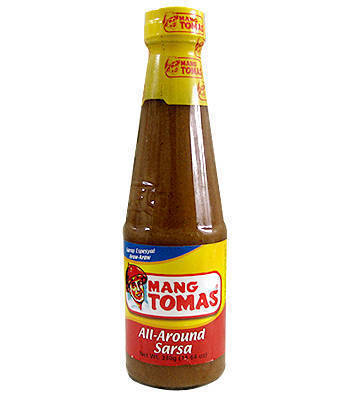
Lechon sauce (sarsa)
Patismansi – fish sauce mixed with calamansi juice
Shrimp paste (bagoong alamang)
Soy sauce (toyo)
Sweet chili sauce
Tomato (kamatis) – fresh chopped; also salted and boiled in water to make something akin to and used like tomato water
Toyomansi – soy sauce mixed with calamansi juice
Vinegar (suka) – those found in Filipino markets are usually a product of sugar cane but some are also derived from coconut; it's often mixed with chili, garlic, and possibly other spices and herbs to make spiced vinegar (sinamak) or combined with chili, garlic, soy sauce, fish sauce or some combination thereof to make a dipping sauce (sawsawan) at the dining table
Wednesday, October 24, 2012
10 Unique Things of the Philippines CLICK here to see them. Now you know my favorites. What are yours?
10 Unique Things of the Philippines
1. The People -=- Generally, Filipino people will go out of their way to help a stranger or a visitor. Yes this is not always the case and certain areas are to be avoided but I have experienced incredible service in shops and restaurants there.
2. The Weather -=- Despite hating the high humidity, I also love it. I prefer it so much more than shoveling snow.
3. The Food -=- I enjoy most of the traditional Filipino foods, with only a few exceptions.
Lechon Manok (roast Chicken on a spit) is one of my favorites.
Filipino baked goods are yummy yummy-yummy too. I am happy to try anything and have yet to come across something baked I dislike. Also, the Filipino spin on western food is quite nice too, Fried Chicken with Rice and Gravy is very popular in the Philippines and I can see why.
Spaghetti sauce is sweet but still tomato based and very nice... Sarap-Sarap :-)))
4. The Laid back Attitude -=- This also makes for Filipino Time which is something I dislike.
There is nothing like sitting down with a group of Filipino's and simply relaxing is something we all should do.
5. The Scenery -=- If you have never been to the Philippines it has some of the most amazing scenery. I could go on and on and on about all the wonderful things to see and do in the Philippines.
6. The Family and Friend Orientations -=- Despite the fact that Filipinos in the USA do not seem to unite for a common goal, in the Philippines it is very different and families work together.
Distant relatives who have made a lot of money will sponsor a cousin or similar to go to college or some other course to better themselves.
Overseas workers pay for the education of one or more relatives back home and this attitude carries on with a "Pay It Forward" kind of attitude.
Neighbors remain friends and will always ask about how they are doing and regularly meet up for meals and drinks. Something lacking in the USA.
7. Meal Time -=- Meal are a family gathering where everyone comes together around the table and food is family style. Food is put in the middle of the table for people to scoop up what they want. Pleasant conversations are as much a part of the ritual of meal times as is the food. While growing up in Pennsylvania this was a regular practice. Unfortunately in the USA this is something we as a nation have moved away from yet the practice is alive and well in the Philippines. In the USA we should strive to return back to this instead of the current TV dinner type of experience!
8. The Prices -=- I can have a quick yummy meal for just a few US dollars!
As a gift I bought a friends daughter a baby walker and it costs about a third of what a similar unit in the USA would cost.
Drinks cost very little too. And, for a westerner this gives us a few extra pesos for tips which makes us seem nicer in the eyes of those serving us.
9. Twelve Hours of Sunlight -=- Being near the equator there is roughly 12 hours of sunlight every day.
This makes for a graceful awakening some time before 6am and you quickly adapt to waking and sleeping naturally and not relying on alarm clocks.
And of course 12 hours of Sunlight means you have plenty of time to enjoy whatever it is yo plan to do that day!
10. Love of Music -=- Every Filipino loves music and makes time to listen to music every day (or at least every Filipino that I know does).
So on my daily travels I will hear music in the malls, coming out of bakeries, stores, tricycles, jeepneys, cars and trucks. Basically you hear music anywhere you go in the Philippines.
Now you heard my ten things. What are yours?
====
If you like this and other Filipino related topics, food, humor and videos be sure to visit us on Facebook at Dr. Dave's Filipino Scene.
Dr. Dave's Filipino Scene promotes cultural diversity of Filipinos around the world uniting them thru humor, fun, food & traditions. Hope you visit our new Fan page.
Here is a link to visit us: (You may need to copy and paste this link into your browser)
http://www.facebook.com/pages/Dr-Daves-Filipino-Scene/159834104096974
Be sure to tell your friends. We hope to see you there.
Salamat:-)))
-=-Dr. Dave-=
.
1. The People -=- Generally, Filipino people will go out of their way to help a stranger or a visitor. Yes this is not always the case and certain areas are to be avoided but I have experienced incredible service in shops and restaurants there.
2. The Weather -=- Despite hating the high humidity, I also love it. I prefer it so much more than shoveling snow.
3. The Food -=- I enjoy most of the traditional Filipino foods, with only a few exceptions.
Lechon Manok (roast Chicken on a spit) is one of my favorites.
Filipino baked goods are yummy yummy-yummy too. I am happy to try anything and have yet to come across something baked I dislike. Also, the Filipino spin on western food is quite nice too, Fried Chicken with Rice and Gravy is very popular in the Philippines and I can see why.
Spaghetti sauce is sweet but still tomato based and very nice... Sarap-Sarap :-)))
4. The Laid back Attitude -=- This also makes for Filipino Time which is something I dislike.
There is nothing like sitting down with a group of Filipino's and simply relaxing is something we all should do.
5. The Scenery -=- If you have never been to the Philippines it has some of the most amazing scenery. I could go on and on and on about all the wonderful things to see and do in the Philippines.
6. The Family and Friend Orientations -=- Despite the fact that Filipinos in the USA do not seem to unite for a common goal, in the Philippines it is very different and families work together.
Distant relatives who have made a lot of money will sponsor a cousin or similar to go to college or some other course to better themselves.
Overseas workers pay for the education of one or more relatives back home and this attitude carries on with a "Pay It Forward" kind of attitude.
Neighbors remain friends and will always ask about how they are doing and regularly meet up for meals and drinks. Something lacking in the USA.
7. Meal Time -=- Meal are a family gathering where everyone comes together around the table and food is family style. Food is put in the middle of the table for people to scoop up what they want. Pleasant conversations are as much a part of the ritual of meal times as is the food. While growing up in Pennsylvania this was a regular practice. Unfortunately in the USA this is something we as a nation have moved away from yet the practice is alive and well in the Philippines. In the USA we should strive to return back to this instead of the current TV dinner type of experience!
8. The Prices -=- I can have a quick yummy meal for just a few US dollars!
As a gift I bought a friends daughter a baby walker and it costs about a third of what a similar unit in the USA would cost.
Drinks cost very little too. And, for a westerner this gives us a few extra pesos for tips which makes us seem nicer in the eyes of those serving us.
9. Twelve Hours of Sunlight -=- Being near the equator there is roughly 12 hours of sunlight every day.
This makes for a graceful awakening some time before 6am and you quickly adapt to waking and sleeping naturally and not relying on alarm clocks.
And of course 12 hours of Sunlight means you have plenty of time to enjoy whatever it is yo plan to do that day!
10. Love of Music -=- Every Filipino loves music and makes time to listen to music every day (or at least every Filipino that I know does).
So on my daily travels I will hear music in the malls, coming out of bakeries, stores, tricycles, jeepneys, cars and trucks. Basically you hear music anywhere you go in the Philippines.
Now you heard my ten things. What are yours?
====
If you like this and other Filipino related topics, food, humor and videos be sure to visit us on Facebook at Dr. Dave's Filipino Scene.
Dr. Dave's Filipino Scene promotes cultural diversity of Filipinos around the world uniting them thru humor, fun, food & traditions. Hope you visit our new Fan page.
Here is a link to visit us: (You may need to copy and paste this link into your browser)
http://www.facebook.com/pages/Dr-Daves-Filipino-Scene/159834104096974
Be sure to tell your friends. We hope to see you there.
Salamat:-)))
-=-Dr. Dave-=
.
Tuesday, October 16, 2012
Do we celebrate Halloween in the USA the same as they do in the Philippines?
Halloween is quickly approaching. In the USA it's a time of celebration and superstition. Do we celebrate Halloween in the America the same as they do in the Philippines?
Yes and no.
Halloween is one of the oldest holidays in America it's a time of celebration and superstition yet it is celebrated very differently in the Philippines.
In the USA we celebrate Halloween on October 31st which is one day before the beginning of the Halloween Season in the Philippines.
That's right, November 1st is the beginning of the Halloween Season in the Philippines, where they observe it as Halowin, Undas or Day of the Dead.
In the Philippines, the "Day of the Dead" is called Undas, which is derived from the Spanish word "anda" or "honra" (possibly), meaning "All Souls' Day" or "Araw ng Mga Patay".
The Undas-season typically starts on November 1 (Todos los Santos or "All Saints' Day") and then ending on November 2nd, "All Souls Day" itself.
Unlike here in the USA where Halloween is not a national holiday. Undas is a state-recognized holiday (no-working holiday) in the Philippines. People all over the country get time off from work or school giving them time to return to their home provinces, where their family cemeteries are located.
Celebrated a day before "All Saints’ Day", Halloween has, evolved into a day of celebration and superstition.
Lots of child-friendly activities like trick-or-treating and costume parties will be held today. Children pretending to be characters from the underworld will make the rounds of commercial establishments like malls, restaurants, and hotels to ask for candies and other treats while chanting “trick or treat”.
In exclusive subdivisions, club houses, and residential condominiums, where houses have been decorated with spiders, cobwebs, scary masks, and characters weeks before Halloween, parties are usually organized. It has also become a tradition for the homeowners to have candies ready for all the children.
Undas or Day of the Dead History // Origin of Undas in Philippine History
Spain had governed the Philippines for over 300 years, and many of their Spanish customs and traditions were passed on to the native Filipinos. These include the ways how Undas or Halloween in the Philippines is typically celebrated.
How Do Filipinos Celebrate Halloween?
In the Philippines, Halloween or Undas can be said to be actually more of an observance than a 'celebration.' It's a day of commemoration of the dead. During the Halloween season, Filipinos go to the cemeteries to visit their 'dead', clean their tombstone (sometimes repaint them), light candles, and offer flowers and prayers for the dead (Catholic masses are also offered).
It's a typical sight to see entire families camping in cemeteries and sometimes even spending the whole night or two near their dead relative's tomb. During this time, card games are played, ghost stories are told, and there are eating, drinking, singing, and merriment in commemoration of the departed loved ones. The occasion is more like a family reunion or banquet or family picnic.
Filipino Halloween of the past
Pag-aatang or Atang
- An Ilocano-Filipino superstitious belief and practice of offering food in an altar for loved ones who had passed away. This is typically just a form of respect and remembrance and holds no religious significance.
Pag-titirik ng Kandila
- 'Erecting a candle' - in front of houses, on the ground or sometimes on top of gates or fences - to guide the souls of the faithful departed coming home to visit during the Halloween season or Undas. (I personally find this very creepy.)
Pangaluluwa
- 'Ghost visits' or 'Haunting' (coming from the word kaluluwa, meaning 'soul'). The Filipino version of 'trick-or-treat' performed usually in the provinces or rural areas, where kids, children, or young folks would dress in white or drape themselves in white sheets going from house to house in the evening or early morning of Undas or Halloween, ghoulishly singing and begging for some alms or foods, treats, or money. (Again, for me, the sound of singing 'souls' in the dead of the night is really really spooky.) This practice is believed to represent the souls stranded in purgatory asking the living for help in the form of prayers so they can get to heaven.
- During the earlier decades, part of this tradition was stealing eggs, chickens, and sometimes even large livestock from the yards of fellow townspeople. It's a friendly Halloween tradition that is now slowly dying out.
Modern-day Halloween Celebrations
Even pets get to wear costumes for Halloween Aside from Spain, the United States also governed the Philippines some time during the first half of the 20th Century, particularly after World War II. Thus, much of the modern-day Halloween celebrations you can see or experience in the Philippines came from the influence of Americans.
Corporate offices, school faculties, private institutions, and other groups and communities hold Halloween parties in celebration. Teens and youth would go to a Halloween Ball in the night club in the city, if not ghost hunting or spirit questing in secluded neighborhoods.
Malls are garishly adorned with Halloween decorations and kids and small children will go trick or treating (in the malls) wearing their best cute, if not scary outfits. Scariest Halloween costume contests among other festivities are also prevalent.
====
If you like this and other Filipino related topics, food, humor and videos be sure to visit us on Facebook at Dr. Dave's Filipino Scene.
Dr. Dave's Filipino Scene promotes cultural diversity of Filipinos around the world uniting them thru humor, fun, food & traditions. Hope you visit our new Fan page.
Here is a link to visit us: (You may need to copy and paste this link into your browser)
http://www.facebook.com/pages/Dr-Daves-Filipino-Scene/159834104096974
Be sure to tell your friends. We hope to see you there.
Salamat:-)))
-=-Dr. Dave-=
.
Subscribe to:
Comments (Atom)