Wednesday, March 13, 2013

Donating For Disaster Relief - Beware of Donation Scams

Donating for Disaster Relief - Beware of Donation Scams

Whenever a natural disaster leads to devastation either at home or abroad, many Americans are looking for ways to help by donating to a relief organization or charity. The Arizona Better Business Bureau warns that fraudulent charities will likely emerge to try and scam donations from well-meaning Arizonans.

The Better Business Bureau of Central, Northern and Western Arizona offers the following tips to help Arizona residents decide where to direct donations to ensure that their money provides the most benefit to the victims of natural disasters:

  • Rely on expert opinion when it comes to evaluating a charity. Be cautious when relying on third-party recommendations such as bloggers or Web sites, as they might not have fully researched the listed relief organizations. The public can go to the BBB online to research charities and relief organizations to verify that they are accredited by the BBB and meet the 20 Standards for Charity Accountability.

  • Find out who will benefit and what type of assistance they will be provided. The immediate needs are usually food, water, shelter, transportation and clean-up efforts.

  • Be wary of claims that 100 percent of donations will assist victims. Despite what an organization might claim, charities have fund raising and administrative costs. Even a credit card donation will involve, at a minimum, a processing fee. If a charity claims 100 percent of collected funds will be assisting victims, the truth is that the organization is still probably incurring fund raising and administrative expenses.

  • Find out if the charity is providing direct aid or raising money for other groups that are active at the scene of the disaster. Some charities may be raising money to pass along to relief organizations that are already active in the region. If so, you may want to consider “avoiding the middleman” and giving directly to charities that have a presence where the disaster took place. Or, at a minimum, check out the ultimate recipients of these donations to ensure the organizations are equipped to effectively provide aid.

  • Be cautious when donating online. Be cautious about online giving, especially in response to spam messages and emails that claim to link to a relief organization. Web sites and new organizations may created overnight allegedly to help victims.

  • Gifts of clothing, food or other in-kind donations are not recommended. In-kind donation assistance is not practical. Most foreign relief organizations prefer cash donations so that supplies can be purchased near the relief site. In-kind drives for food and clothing, while well intentioned, will rarely end up being delivered to those in need.

  • If tax deduction is a concern, donate domestically. To help ensure your contribution is tax deductible, the donation should be made to a U.S.-based charitable organization that is tax exempt under section 501(c)(3) of the Internal Revenue Code. Go to IRS Publication 78 on www.irs.gov for a current list of all organizations eligible to receive contributions deductible as charitable gifts.
  • We are luckier than most; people in the Greater Phoenix area face very few natural disasters. While it is true that we have extreme heat, it is predictable and is not nearly as devastating as earthquakes, floods, tsunamis, or hurricanes.

    Sunday, February 24, 2013

    Stereotypes about Filipino culture [CLICK TO READ THIS] Have any of these stereotypes ever been applied to you?


    The 10 most common stereotypes about Filipino culture

    One of my Filipina friends recently shared with me some of the “Filipino” stereotypes she and her family had experienced while growing up in the United States among the Americans.

    Even though my friend was born here and grew up immersed in the American culture, her family kept traditional Filipino customs and taught her a thing or two.

    However, over a long span of life in USA, I’ve met many “foreign born” citizens who share their cultural backgrounds with the locals – and there are many of such Americans, and that makes the USA one of the most diverse countries in the world – because of all the people of various cultures gathered in one place.

    Here are some of the stereotypes of the Filipino culture that she shared with me:

    1) Filipinos drive only Japanese cars, because they are reliable and practical.
       Even though it’s not true to all Filipinos, many of us, and them, would agree
       with this one statement!

    2) Filipinos are always late to everything. Even though it’s regarded as a stereotype,
       my friend did admit the fact that she is usually late, as well. Better known to us as
       "Filipino time."

    3) Someone asked her if she has ever eaten a "dog". In some provinces in the Philippines,
       they do eat "dogs", but they are the "wild" dogs. Neither her, nor her family, have
       ever eaten one.

    4) Upon entering a Filipino's home, one must remove one’s shoes, and should put on
       slippers. Filipinos don't like "outside dirt" inside the home. This is actually a
       very common thing in Russia, Ukraine, Germany and France – based on my direct
       experience.

    5) Filipinos loves "rose gardens and orchids", one can tell if you are walking by a
       house, and you see a plentiful amount of them, it is a "Filipino" home.

    6) Most Filipinos like "oriental" furniture, with the "plastic" covers, and "plastic
       rug runners".

    7) Some Filipinos eat with their "hands".  This is true.

    8) Filipino parents would get their attention, by saying, "Psst!" and "Hoy!"
       You are a true "Filipino", if you turn around.  :-)))

    9) Most Filipinos tend to work in accounting, as physicians or nurses, or electrical engineering.
       I knows a lot of Filipino nurses, physicians and accountants, in the area where we live.
       Filipino parents tend to push “math and science" majors in college, she says.

    10) My friend’s Filipino lolo (grandfather) told her mother: "The Chinese treat the
        Filipinos, like second-class citizens." On their recent trip to Hong Kong and
        Macau, they experienced it, since most of the domestics (housekeepers) are Filipino.
        There are a lot of Chinese-Filipinos in the Philippines, and they are very wealthy
        he said.

    If you are a Filipino, can you please tell me if any of these stereotypes have ever been applied to you.  Some stereotypes are both healthy and fun, and completely harmless.  Others, well, you know ... What are your thoughts?


    If you have any other stereotypes to share that have not been included here, please leave a comment below. This way we all become more culturally aware.  Salamat...


    -=-Dr. Dave-=-
    ====


    If you like this and other Filipino related topics, food,  humor and videos be sure to visit us on Facebook at

     Dr. Dave's Filipino Scene. Here is a link to visit us:  (You may need to copy and paste this link into your browser)

    http://www.facebook.com/pages/Dr-Daves-Filipino-Scene/159834104096974

    Be sure to tell your friends.  We hope to see you there.

    Salamat:-)))
    -=-Dr. Dave-=

    .
    Please SHARE our posts to help promote the unique beauty & ingenuity of the Philippines and its people ❤ https://www.facebook.com/dr.daves.filipino.scene
    .

    Thursday, February 21, 2013

    Is There a Secret Code? Deciphering Those Hidden Meanings behind Filipino Expressions :-))) [CLICK TO READ THIS]


    Married to a Filipina and at times have a hard time understanding the message they are trying to get across? Then this is for you.  Here we answer the question, "Is There a Secret Code?  Deciphering Those Hidden Meanings behind Filipino Expressions."

    Were you ever presented with a Filipino expression and asked yourself, just "what is he or she telling me?  What are they trying to say?"  If so, this may hold the answers you were looking for.  :-)))

    Before Chat Acronyms & Text Message Shorthand became so familiar words and expressions were used.  Many of them we can still relate to today... :-)))   I know that I can.

    The other day I shared this list with my wife Lucy.  She said that she agrees with at least 95 percent of these.  How about you?

    How many of these can you relate to?


    1. "Mwah" means... "I love you"

    2. "Makaligtaan ko sa iyo" means..... "I miss you"

    3. "Ok ka lang?" means... " ano ka hilo?!?!"

    4. "Hay nako!" means..... " seryoso ako"

    5. "Ingat ka lagi" means... "I care for you"

    6. "Musta na?" means... " sino'ng love mo?"

    7. "Secret" means..... " ikaw"

    8. "Ano'ng problema mo?" means... " hurt naman ako"

    9. "Kayo pa rin ba?" means.... "ako naman"

    10. "Chick boy ka pala eh!" means..... " ang kapal mo!!!"

    11. "Grabe ha!!!" means... " selos ako"

    12. "Saan?" means..... " sama ako!"

    13. "Shit!" means... " ako na lang kasi eh!!"

    14. "Inaantok na ako" means..... "wala kang kwentang kausap"

    15. "May gagawin pa ako eh" means..... "maghanap ka ng kausap mo"

    16. "Bakit naman?" means..... "alam mo namang ikaw lang"

    17. "Nakakaaliw ka" means..... "ang cute mo"

    18. "Ewan" means..... " oo "

    19. "Ganon?" means... "kapal mo!!"

    20. "Eh kasi" means... " nahihiya ako"

    21. "Talaga lang ha?" means... "naku, bola!!"

    22. "Basta" means... "wag kang makulit"

    23. "Busy ka?" means... " kausapin mo naman ako"

    24. "Pwede ba" means... " mas cute naman ako sa kanya "

    25. "May kasabay ka?" means..... "nood tayo ng sine & kain sa labas"

    26. "Miss' nahulog" means..... "anong number mo?"

    27. "Magwiwithdraw pa ako" means... "pucha naman, ikaw muna!!"

    28. "May barya ka sa 100?" means..... "pautang muna, sa sweldo na kita babayaran"

    29. "Kawawa ka naman" means... "Buti nga...sabi ko sayo eh!"

    30. "Susunod ako" means... "umalis ka na! Ang kulit mo eh"

    31. "Thank you sa gift ha" means..."Ang cheap mo naman"

    32. "San kaya pwede makitulog" means... "check-in tayo"


    *****
    Are there any expressions and their meanings missing from this list?  
    If you can think of any please take a moment and leave me a comment below.
    Tell me the expression and what it means and I will add it to this list.  Salamat!

    -=-Dr. Dave-=-

    ====


    If you like this and other Filipino related topics, food,  humor and videos be sure to visit us on Facebook.

    .
    Please SHARE our posts to help promote the unique beauty & ingenuity of the Philippines and its people ❤ https://www.facebook.com/dr.daves.filipino.scene
    .

     
    You No longer Need A Secret Decoder Ring :-)
     

    Monday, February 4, 2013

    Lechon - A Sought After Food During Any Filipino Special Occasion.


    Lechon - A Sought After Food During Any Filipino Special Occasion.


    Called "LECHON" (pronounced LEETCH-onn), by Filipinos near and far, this mouth-watering cuisine of roasted suckling pig is usually found during festivities, holidays, special occasions, birthdays, baptisms, weddings, and more.

    Lechon is traditionally the center-piece of the celebration as guests look forward to see and taste lechon in any special Filipino celebration.
        
    Center Piece of Special Occasions


    Tempting Lechon Aroma

    How could you possibly withstand the tempting aroma of lechon slowly roasted to golden brown over the coals?
    The juicy meat under the glazed crispy skin drawing you in to take a bite. 
    A Filipino celebration is not complete without lechon on the table.

    Lechon is a Spanish word meaning roasted suckling pig.  Most Americans I know, who have tasted lechon agree that Filipino lechon is one of the best tasting foods they have ever tried.  Although there are many recipes for Filipino lechon, the best tasting is the one from Cebu in the Southern part of the Philippines.

    A whole roasted pig or lechon takes a lot of time and energy to prepare. 

    First the pig is seasoned and skewered on a rotisserie.  Then it is cooked slowly over a bed of hot charcoal.  And while being cooked the lechon is constantly brushed with special sauce that turns the roasted pig’s skin into a deliciously glazed, red, crunchy skin.  The crunchy crispy skin is a Filipino favorite.

    Slow Cooked Over Charcoal


     The Right Spices and Slow Cooking Process Makes The Difference

     
    To a Filipino the lechon’s outward appearance is as important as its taste.

    To achieve the unique taste of the Cebu lechon the right spices are critical.  This  includes a large bunch of lemon grass, peppercorn and other condiments.


    These spices are responsible for the yummy taste and irresistible aroma of Filipino lechon.   Lechon is absolutely a feast of your senses as it creates a festive air of celebration!


    Inside with the ingredients for a yummy Cebu Style Lechon


    After eating some of this yummy lechon I was  a little silly.  

    The head to this little piggie is wearing my glasses:-)  LOL


    COME AND JUDGE FOR YOURSELF - Later this year we are going to know for sure at the LECHON COOKOFF  to be held at the Arizona Filipino Festival on October 5 & 6th, 2013 in Tempe Arizona USA

    Visit the Official Facebook page of the Arizona Filipino Festival at the following link:

    https://www.facebook.com/pages/Arizona-Filipino-Festival/181542755313124?ref=ts&fref=ts

      The Philippines is about family, community and togetherness. Food is a huge part of that experience. So eat together and love together. LECHON!

    .

    Thursday, January 24, 2013

    Media Bias and those who use the power of friendships in the media to manipulate a story


    MEDIA BIAS 


    Is the term MEDIA BIAS new to you?  Allow me to take a moment to explain.  It is really very simple.

    Wikipedia describes MEDIA BIAS as "the bias of journalists in the selection of what they choose to put in stories and what they choose to exclude. Clearly a sign of overt and covert censorship." 

    It is the bias of journalists and news producers and their selection of events and stories that are reported and how they are covered.  Unfortunately, media bias is as wide spread and like the common cold... It can be found all over the world.  This is not the first time we have seen Media Bias... Nor will it be the last.

    We have seen those who use the power of friendships in the media to manipulate a story into what I shall refer to as MEDIA BIAS AND PROPAGANDA.


    I am not alone when I say that WE HAVE ALL SEEN JOURNALISTS WHO FAIL TO REPORT ALL AVAILABLE DETAILS AND FACTS OF A STORY OR EVENT, ESPECIALLY WHEN THEIR FRIENDS AND ADVERTISERS ARE INVOLVED.

    You can find media bias in newspapers, radio, and television around the world.

    When it comes to reporting stories involving friends, these affiliations may be considered a conflict of interest..

    Yet those in THE MEDIA WOULD LIKE YOU TO BELIEVE THEY ARE ABLE TO REMAIN OBJECTIVE and that their reports are fair and accurate.

    *** NOTHING CAN BE FURTHER FROM THE TRUTH. ***

    We see this time and time again when personal friends of those in the media are directly involved in an event or situation that others consider newsworthy. 

    If their friends are involved and they do decide to cover the story you can be sure of one thing.  The facts in those STORIES ARE TWISTED, SUGAR COATED, AND SKEWED.  CRITICAL FACTS ARE OMITTED ALL TOGETHER AND OFTENTIMES THE STORY BECOMES MORE OF A COHERENT NARRATIVE THAN AN ACTUAL NEWS STORY.

    It is amazing the lengths they go to in order to protect their friends and/or advertisers from humiliation.    ****** IT IS ALL ABOUT THE MONEY. ******

    MEDIA BIAS AND PROPAGANDA ARE NOTHING NEW.   Those in various forms of media have used this as a mechanism for propaganda for many generations. This practice has gone on long before you and I were born and it will continue long after we are gone. 

    In his article of June 7, 2011, Stefano Mario Rivolta of #BeyondBias lists three forms of media bias:

    1. Gate keeping bias, - deciding whether to release a story or keep it quiet.
    2. Coverage bias - deciding to cover a story or pretend its not news worthy.
    3. Statement bias - cherry picking, twisting and skewing statements.

    It comes as no surprise that all three of these forms of media bias and propaganda were clearly displayed in a recent article.

    In the media it is fairly easy to "prove" one side of a story over another.   It is really that simple.  THEY CHERRY-PICK STATEMENTS THAT SUPPORT THEIR FRIENDS AND ADVERTISERS WHILE IGNORING ALL OTHER EVIDENCE TO THE CONTRARY.

    What is important, is that media bias does not matter much if no one Is listening or reading anyway because even with their cherry picked statements many already know the truth. 

    God Bless,
    Dr. Dave

     NOTE:  #BeyondBias is an internationally recognized standard aimed at increasing public understanding of good journalism and encouraging media audiences to become critical users of the news they consume.

    TWITTER:  https://twitter.com/Beyond_Bias
     

    Sunday, December 30, 2012

    New Year's Eve in the Philippines

    New Year's Eve in the Philippines

    Bisperas ng Bagong Taon ("New Year’s Eve") is a festive time in the Philippines. There are a lot of traditions that Filipinos follow in the belief of ushering in a prosperous New Year. Many of these customs you may recognize as showing a Chinese influence.

    FILIPINO FOOD ON NEW YEAR’S EVE

    Special food is prepared, but not like the Noche Buena feast on Christmas Eve, although some families might be wealthy enough to prepare another lechon (roasted pig) after serving one on Christmas. For sure, pancit (noodles) are cooked to signify long life, as are eggs signifying new life. Traditional delicacies made from malagkit (glutinous or sticky rice) like biko are prepared — that’s so good fortune will stick around throughout the year. Fish and chicken are not served because these animals scrounge for food, and we don’t want to have to scrounge for food in the coming year.

    Part of the fun in getting ready for New Year's Eve is to come up with twelve (12) round fruits, each to signify a month of the year. Ideally, there should be twelve different fruits — grapes, oranges, clementines, cantaloupe, pomelo, watermelon… It’s a tough challenge, so half the fruits likely end up being non-circular like mangoes and apples. The fruit that Filipinos most associate with the celebration of the new year and will rarely be without is imported ubas, purple grapes that are very round.

    THE NOISIEST TIME OF THE YEAR IN THE PHILIPPINES

    The same way Americans enjoy Fourth of July fireworks, Filipinos go all out with the noise on New Year’s eve. Filipino paputok (firecrackers) come in so many shapes and go by very interesting names — judas belt (a string of firecrackers), super lolo (“grandfather”), kwitis (from the Spanish word cohetes meaning rocket), bawang (“garlic”), airwolf…

    Children love scratching the dancing firecracker watusi against concrete sidewalks and cemented surfaces, although the government has been warning against it because of chemical poisoning.

    Pots and pans are clanged to scare away evil spirits. A few men shoot guns in the air if they think they can get away with it. Cars and trucks are vroomed and horns are tooted to cause as much noise as possible. Empty cans are dragged all around, whistles are blown.

    OTHER FILIPINO TRADITIONS ON NEW YEAR’S EVE

    Before the clock strikes midnight to herald in the new year, all doors must be left wide open to allow good luck to enter. This includes cupboards, drawers, cabinets... windows!

    Filipinos try to dress in polka-dots because the roundness signifies prosperity. Pockets are filled with round coins, which are jangled to attract wealth. Coins are also left on top of tables and in drawers.

    At the exact moment of midnight, Filipino children jump as high as they can because they believe this will make them taller.

    Whatever condition your wallet is in when the New Year arrives, so it will be the rest of the year. Make sure to put in the money your received on Christmas. The same goes for the neatness of your home.

    Filipinos spend the last days of the year vigorously cleaning everything, especially of dust. However, on thefirst day of the new year, you are not supposed to do any cleaning. No cleaning on New Year’s Day itself!

    And don’t start the year off by spending money. Frugality on the first day sets the tone for wise money management in the coming year.

    Manigong Bagong Taon! Happy New Year!


    Tuesday, December 11, 2012

    The 12 Days of Christmas -=- Did you know?

    The 12 Days of Christmas -=- Did you know?


     Some early traditions hold that this song was used as a teaching tool to instruct young people of various denominations in the Christian faith. Even without the symbolism, the song is a playful piece that loses none of its appeal when taken at face value.

    1. A Partridge in a Pear Tree

    The partridge in the pear tree is Jesus on the cross. The bird imagery can also be seen as symbolic of Christ’s teaching “as a hen doth gather her brood under her wings” (Luke 13:34)

    2. Two turtle doves

    The two turtle doves represent the Old Testament and the New Testament.

    3. Three French Hens

    The three French hens symbolize the three members of the Godfather: the Father, the Son, and the Holy Ghost, Alternatively, they represent the three virtues; faith, hope, and charity (1 Corinthians 13:13)

    4. Four Colly Birds

    The four “colly” is an old word for “black” stand for the four Evangelist – Matthew, Mark, Luke and John – or the four Gospels they wrote.

    5. Five Golden Ring

    The five gold rings correspond to the first five books of the Bible, sometimes referred to as the Pentateuch.

    6. Six Geese A-Laying

    The six geese a-laying refer to the six days of Creation (Genesis 1:31; Exodus 20:11)

    7. Seven Swans A-Swimming

    The seven swan a-swimming suggest the seven gifts of the Holy Spirit (Romans 12:6-8), alternatively seven swans represent the seven sacraments recognized by some faith traditions.

    8. Eight Maids A-Milking

    The eight maids a-milking signify the eight Beatitudes from Christ’s Sermon on the Mount (Matthew 5:3-10).

    9. Nine Ladies Dancing

    The nine ladies dancing embody the nine fruits of the Holy Spirit (Galatians 5:22-23).

    10. Ten Lords A-Leaping

    The ten lords a-leaping denote Ten Commandments (Exodus 20:3-17).

    11. Eleven Pipers piping

    The eleven pipers piping are the eleven faithful Apostles (Luke 6:13-16; Acts 1:26).

    12. Twelve Drummers Drumming

    The twelve drummers drumming are the doctrines in the Apostles’ Creed (namely: 1. belief in the Father, 2. Belief in the Son, 3. the virgin birth, 4. the atonement, 5. his ministry after death, 6. his ascension to Heaven, 7. his role as judge, 8. belief in the Holy Ghost, 9. belief in the church, 10. forgiveness of sins, 11. the resurrection, 12. and eternal life.


    Monday, November 5, 2012

    Flavors of the Philippines. Where Did Your Favorite Filipino Food Really Come From?

    Flavors of the Philippines. Where Did Your Favorite Filipino Food Really Come From?


     Ever wonder how your favorite Filipino dish came about?  Have you ever noticed how the cooking methods and use of ingredients in one region of the Philippines differs from the other? Recognizing the similarities and differences of Pinoy Foods with dishes from other countries helps us to better understand its origin?

    There are a lot of questions to ask regarding the origin of Filipino Food but I think that it would really help if we first define what Filipino Food is.

    How do we define it?

    We all know that it comes in different names such as: Filipino food, Pinoy food, Pagkaing Pinoy, Pinoy dishes, Filipino dishes, Lutong Bahay (though this is general). Regardless of the term we use, Filipino foods (in my opinion) can be any of the following:
    • Foods that are native to the Philippines (Authentic Filipino foods)
    • Variation of foreign foods modified to suit the Filipino taste (e.g. Pinoy Spaghetti).
    Filipino foods, like the people, are diverse in many ways. During the pre-Hispanic period, nearby countries (located south) like Malaysia, Brunei, and Indonesia influenced the manner of food preparation in some Southern Philippine islands.

    The use of spices such as curry, cumin, and paprika plus the method of cooking meat in coconut milk were just some of it.

    During the Spanish colonization, Filipinos learned to eat Spanish foods and use different kinds of spices (as taught during our history classes, the Philippines was accidentally discovered while Magellan was searching for the spice island of Moluccas).

    This was also the start of the spice trade between Spain, the Philippines, and Tidorein Maluka  (present day Moluccas).

    The Chinese also traded with the Filipinos as early as the 15th century. Remember Quiroga in El filibusterismo?

     This was when Chinese food was introduced. Along with the Chinese were other traders such as the Arabs and Indians which also left some influences.

    Later on, Americans came and introduced American food which was welcomed and immediately embraced by the Filipinos.

    Indeed, the Philippines has a very rich history. Along with the history are the rich food brought about by the influences of different cultures.

    Food can introduce Filipino culture to the rest of the world.

    Your thoughts?


    Wednesday, October 31, 2012

    10 Things the world can learn from the Philippines

    10 Things the world can learn from the Philippines


    1)    How to smile

    In the Philippines there are some of the most fantastic smiles I have ever seen.  It’s real.  It's genuine.  Faces light up, all teeth accounted for, with a contagious glow that can spread far and wide.

    Lesson: Plain and simple – Smile! Remember to smile as much as possible because everyone knows that smiles are contagious!

    2)      How to laugh

    Another quality that I like about the Filipino people is their willingness to laugh. Far too many people here in the Unites States do not laugh or they have a fake laugh.  When you have experienced a truly genuine laugh you cannot help but laugh yourself.  And a good laugh is therapeutic.


    Lesson: Laugh! Don’t take life too seriously.  Do what makes you laugh.

    3)      Short men can jump

    In a country where the average height is 5’4’’ for men, basketball is an ambitious and popular national sport.  Basketball, a sport where those with taller heights have a definite advantage,  this doesn’t stop the Filipinos who are surprisingly talented players, despite their height.  While hard to compete at the NBA level, where the average height is 6’7, they always seem to give it their best shot.  Filipinos are highly competitive in the Asian leagues.

    Lesson: Prove people wrong.  If you are apparently too short, too fat, too tall, too thin, not intelligent enough, then prove people wrong.

    4)      How to sing

    If basketball is the national sport then singing and karaoke must be the all time national activity of the Philippines too.

    You can sing anywhere and everywhere!  Videoke and Karaoke rooms, the office, in church, walking down the street, while riding in a jeepney, tricycle, or in a restaurant, Its clear that no matter where you are you can always sing, sing and sing some more.

    Lesson: Don’t restrict yourself to just the shower, Sing! “Sing like no one is listening.  Dance like no one is watching. Love like you’ve never been hurt and live like it’s heaven on Earth” – Mark Twain

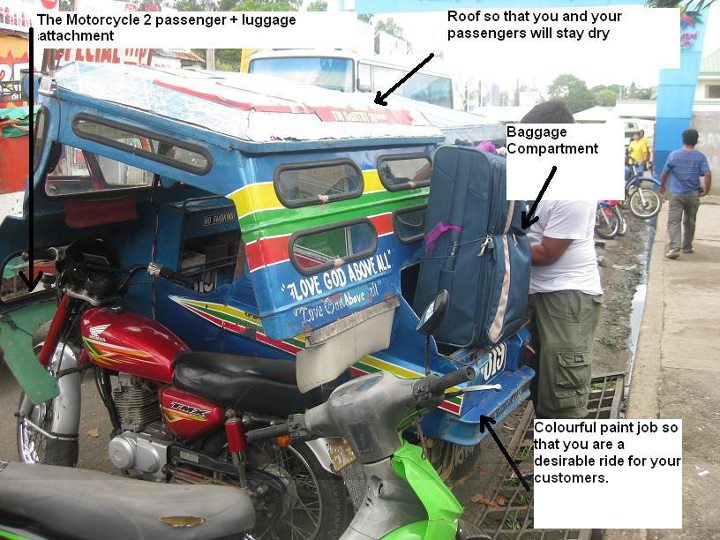
    5)      How to pack your ride

    The average Philippines motorcycle leaves the car pooling lane for dead.  If you want a more eco-friendly mode of transport then put your wife and three kids on a bike and Voila!  If you’re not a biker that's ok. Just grab a van or a jeepney and take your entire neighborhood to town.

    Lesson:  Ok so let’s try something a bit more realistic and pack our cars with as many people as there are seat belts or take public transportation.  If you are traveling solo opt for a scooter!


    6)      How to pimp your ride


    Lesson: One of the main things about vehicles in the Philippines, in fact any object in the Philippines is that there are no COLOR barriers.  C’mon people you’ve got a whole rainbow to work with.  Let’s put away the blacks, greys, whites and bring out the yellows, reds, lime greens, whatever.  Let’s try to get away from the black suit, white shirt, tie phenomenon unless that’s really you?

    7)      How to eat rice

    How to live, breathe, eat, sleep, everything rice.  How to grow rice.  Unlimited rice, rice with garlic, sticky rice, rice for breakfast, lunch, and dinner, RICE.  Okay I think you get the picture.  Unfortunately the Philippines is currently experiencing shortages in rice supplies and has to import a lot of rice from neighboring South East Asian countries.

    Lesson:  In order to support the Philippines in achieving agricultural sustainability choose an agricultural loan from CEVI going to one of its rice growing clients.  Help them produce enough rice to feed the nation and reduce their imports.  Let’s apply this model to the rest of the world; choose local produce, try to harvest something on your own, get more in touch with nature.  It feels good.

    8)      How to grow tropical islands

    They just seem to pop up everywhere!  The Philippines boasts over 7000 tropical islands; big islands, small islands, enchanted islands, tropical islands.  You name it, the Philippines has it.

    Lesson:  I would 100% recommend embarking on a journey to this fine country, if you are fortunate enough to be able to travel.  And when you get here make sure you put money into the local economy not just chain shops and big name resorts.  In fact do this wherever you travel.   If you want any recommendations on some spectacular destinations within the Philippines contact me through my lender page.

    9)      How to let people in – accommodate, and share

    Filipinos are renowned for their ability to accommodate; even complete strangers will be welcomed with the utmost respect.

    Lesson: Let’s build communities not gates.  If you have a fruit tree overflowing take some to your neighbors, work mates, friends at school.  Couch Surf.  Open yourself up to the world and connections with your neighbors in a global and personal sense.

    10)   How to appreciate

    One of the themes which is a big part of everyday life in the Philippines is the art of thanksgiving.  They are constantly thankful for what they have.  It is a philosophy which will get you through any situation in life and ensures that the positives are highlighted.

    Lesson: When you wake up in the morning think of at least one thing you are thankful for before you start the day.  Cliche as it may be, if you start each day with a few Filipino philosophies; appreciating, accommodating, laughing, smiling, and singing then it’s much more likely that you’ll have a good one!
    Let’s focus on the good news not the bad news.  Let’s move forward as a positive, unified, sharing, society based on the true human values of love and compassion.


    ====

    If you like this and other Filipino related topics, food,  humor and videos be sure to visit us on Facebook at Dr. Dave's Filipino Scene.

    Dr. Dave's Filipino Scene promotes cultural diversity of Filipinos around the world uniting them thru humor, fun, food & traditions.  Hope  you visit our new Fan page.

    Here is a link to visit us:  (You may need to copy and paste this link into your browser)

    http://www.facebook.com/pages/Dr-Daves-Filipino-Scene/159834104096974

    Be sure to tell your friends.  We hope to see you there.

    Salamat:-)))

    -=-Dr. Dave-=
    .

    ‘Kawang gawa’ uniquely, naturally Filipino written by our Filipina friend Jacqueline Cancio Vega


    Kawang gawa’ uniquely, naturally Filipino written by our Filipina friend Jacqueline Cancio Vega

    This short article sounds like something I would have written.  Thanks for sharing this with us Jacqueline Cancio Vega.

    She writes:

    Many years ago on Salcedo Street, Legazpi Village, a woman standing on the curb could not get into her car because of the heavy rain.

    Then a man with an umbrella proffered his umbrella so she could get into her car. Tucked safely inside, her hand waved out into the rain with a P20-bill to give the man. The man just walked away and another man watching, just looked incredulous and said “kawang gawa” lang ’yun.”

    It was the first time I heard the phrase. I asked my driver Mang Frank what the phrase meant, and he said “gawaing walang anuman, na hindi humihingi ng kapalit, na galing sa puso.” There is no real English equivalent for it and it roughly translates to: “work that expects nothing in return or work from the heart.”

    I realized that I had just witnessed a cultural trait that Katrin de Guia, in her book “Kapwa: the Self in the Other,” expounded on—a trait that most urbanized Filipinos who grew up in Manila are not familiar with anymore.

    De Guia is the German-born wife of Kidlat Tahimik, the renowned filmmaker.  She took her doctoral studies in UP with Virgilio Enrique, the renowned professor who developed “Sikolohiya Filipino.” She explores the kapwa trait that she says is so uniquely Filipino and is something that Filipinos can offer the world as an alternative to the “me, myself  and I culture” that defines modern life, because our indigenous world-view is so life-enhancing.

    SWS surveys have documented the giving trait of the poorer Filipinos as being more generous than the rich. This has been more pronounced with the floods that Tropical Storm “Sendong” caused, with the small folks giving from the little they have versus the rich giving from their plenty. Then too, the Algires of Cabuyao who took the lost Tata Leo in and reconnected him with his family are perplexed why reward was being offered or the Inquirer was interviewing them for “kawang gawa.”

    Since that rainy afternoon in Makati, I have explored this kapwa world more and I have realized that our culture is so rich with goodness and wonderful practices that we who grew up in the urbanized, exclusive subdivisions have forgotten or never even knew. We tend to look down on people we consider poor, keeping them away from us with guards at the gate and demeaning people with the frisking practices at malls. Yet the truth is, we “the people who forgot,” are the poorer people. By denying people the respect and dignity due them because we consider them “poor,” we deny our rich culture that has so much to teach us.

    —JACQUELINE C. VEGA,
    Jacqueline_cancio_vega@yahoo.com


    NOTE:  Although some will hate me for saying this it does not change the fact that it is the truth.

    There are some Filipinos (Of course Not all Filipinos) who come to the USA and seem to quickly forget where they came from in the Philippines. 

    Instead of following this uniquely Filipino custom of ‘Kawang gawa’ they opt to cheat and steal from their Filipino neighbors here.  They may have more material things than they had while living in the Philippines yet that is no reason to lose this cultural trait which truly make them uniquely Filipino.


    .

    Sunday, October 28, 2012

    Why Filipinos Celebrate Festivals

    Why Filipinos Celebrate Festivals

    Sociable and cheerful, Filipinos love holding Philippine festivals, celebrations that are fun, colorful, exciting and also very meaningful.

    Called fiesta or pista in the Filipino language, these festivals are held all year round in many islands of the Philippines for different reasons:

    * to give thanks for good harvest or catch
    * to mark special events in local history
    * to venerate Catholic saints

    Whatever the reasons for staging them might be, Philippine festivals are deep-rooted in Filipino culture.

    They have been celebrated by many generations of Filipinos.

    They have helped to form and seal friendships and camaraderie with one another.

    They have also lifted their sometimes battered spirits. They are such a great lift up from the otherwise hard life in the country.

    There are so many festivals in the Philippines and the list definitely goes beyond 10.

    Still, below is a short list of the top 10 most colorful, exciting, and fun fiestas in the Philippines.


    Top 10 Philippines Festivals


    1. Ati-Atihan Festival of Kalibo

    Why Filipinos Celebrate this Festival


    Considered as the mother of Philippine festivals, Ati-Atihan Festival is held yearly in Kalibo, Aklan in Panay Island, Philippines.

    It is said to be the precursor of other grand festivals in the Philippines, including the Sinulog Festival of Cebu City and the Dinagyang Festival of Iloilo City.

    In this festival, townsfolk dress themselves in aboriginal clothes and deck their bodies with weapons used by the island’s earliest settlers – the Aetas.

    Then, they perform tribal dances, moving to the upbeat tune of traditional music as they wind through Kalibo’s streets that are then jampacked with spectators.


    When Filipinos Celebrate this Festival:

    Third weekend of January each year


    2. Sinulog Festival of Cebu City

    Why Filipinos Celebrate this Festival


    A festival that marks the local people’s transition from paganism to Catholicism, Sinulog Festival of Cebu City is celebrated in a grand way for nine days in January each year.

    It is held in honor of Santo Niño, whose icon is carried by many of the festivals elegantly dressed revelers.

    It kicks off with a fluvial procession – where an icon of Santo Niño is hosted in a boat adorned with flowers and candles – and ends with the festive Sinulog Grand Parade – a parade of costumed townsfolk gracefully dancing while cleaving to icons of Santo Niño.


    When Filipinos Celebrate this Festival:
    Third weekend of January each year


    3. Dinagyang Festival of Iloilo City

    Why Filipinos Celebrate this Festival


    A festival that exhibits the local people’s excellent choreography, Dinagyang Festival of Iloilo is a religious-cultural event famous for its Ati-Atihan and Kasadyahan.

    Ati-Atihan is a parade of about twenty groups of local people dressed as tribesmen.

    Their bodies are covered in soot and they dance to the beat of drums and gongs.

    Kasadyahan is a cultural presentation of the province’s early history and the people’s conversion to Catholicism.


    When Filipinos Celebrate this Festival:
    Fourth weekend of January each year


    4. Panagbenga Festival of Baguio City

    Why Filipinos Celebrate this Festival


    A festival meant to inspire the local people to “bloom” and move forward after a 1990 earthquake left their city shattered, Panagbenga Festival or Flower Festival of Baguio City is also homage to the beautiful flowers that bloom in Baguio, the Philippines’ summer capital.

    During this festival, local folks create floats that are ornately decorated with flowers grown in Baguio and its surrounding provinces.

    They also dress themselves in flower-inspired costumes, perform traditional dances to the sounds of drums, and parade down the city’s main roads.


    When Filipinos Celebrate this Festival:

    The entire month of February / parade on the last Sunday of February or first Sunday of March


    5. Moriones Festival of Marinduque

    Why Filipinos Celebrate this Festival


    A Lenten Season celebration that fuses folk history and religious events, Moriones Festival of Marinduque has the local people wearing masks to appear like the Roman soldiers of the biblical times.

    This festival pays tribute to Saint Longinus, a commander of a century in the Roman army, who was blind in one eye.

    This centurion’s story is reenacted in an elaborate theatrical play staged by the locals.

    Many Moriones Festival’s revelers also wear masks during the festival season, roaming the streets and jolting people for good-spirited fun.


    When Filipinos Celebrate this Festival:

    Good Friday of the Lenten Season of each year


    6. Carabao Festival of Pulilan

    Why Filipinos Celebrate this Festival


    The Carabao Festival of Pulilan in Bulacan is a day of respect for Saint Isidore the Worker – the patron saint of the farmers – and the Filipino farmers’ work companions – the carabaos or water buffalos.

    In this festival, carabaos are paraded on the streets and made to kneel at the end of the parade.

    The act of kneeling is supposed to replicate a man who knelt before Saint Isidore after finding out by surprise that an angel would help the saint plow the fields.

    In the Philippines, carabaos help farmers toil the soil.


    When Filipinos Celebrate this Festival:

    May 14 and May 15 of each year


    7. Pahiyas Festival of Lucban

    Why Filipinos Celebrate this Festival


    Another festival held in honor of Saint Isidore, who Filipinos ask for intercession when praying for a bountiful harvest, is the Pahiyas Festival of Lucban in the province of Quezon.

    This festival is very famous for its decorations, as households try to top one another in decking their houses’ facades with fruits, vegetables and handicrafts, creating an explosion of colors in Lucban’s streets.

    Also during this festival, people share foods with one another.

    These foods include pancit Lucban, triangulo biscuits, fruits, vegetables, and other local treats.


    When Filipinos Celebrate this Festival:

    May 15 of each year


    8. Peñafrancia Festival of Naga City


    Why Filipinos Celebrate this Festival


    The Peñafrancia Festival is a religious festival that honors Naga City’s patron saint – the Our Lady of Peñafrancia – whose wooden icon was brought to the province by its devotees all the way from Salamanca, Spain.

    It is a nine-day novena that is capped with a fluvial procession, where the image of the Our Lady Peñafrancia is carried in a pagoda down the Naga River and accompanied by hundreds of flower- and candle-bearing faithful Catholics who chant "Viva La Virgen!"


    When Filipinos Celebrate this Festival: 
     Third Saturday of September each year


    9. Higantes of Festival of Angono


    Why Filipinos Celebrate this Festival


    Fishermen and townsfolk in Angono, Rizal in the Philippines honor the city’s patron saint – San Clemente – on November 23 of each year during the Higantes Festival.

    The saint’s gigantic images, made of recycled and painted paper, are paraded by fishermen wearing colorful clothing and bearing fishnets, boat paddles, and other tools they use for fishing.

    These images are as high as 12 feet and as wide as five feet.

    The parade navigates the streets of Angono until it reaches the banks of Laguna de Bay.


    When Filipinos Celebrate this Festival:

    November 23 of each year


    10. Giant Lantern Festival of San Fernando


    Why Filipinos Celebrate this Festival


    Christmas is such a big event for the Filipinos but for the people of San Fernando, it is enormous.

    In fact, they like their Christmas lanterns not big but gigantic.

    The local people stage the annual Giant Lantern Festival, an awe-inspiring display of over-sized lanterns handcrafted by the locals and made to light up to the tune of lively music and breathtaking fireworks.

    So popular is this local festival that San Fernando has earned the title of the Christmas Capital of the Philippines.


    When Filipinos Celebrate this Festival:

    The Saturday before Christmas Eve of each year

    Friday, October 26, 2012

    Think you know the common Filipino condiments?


    Filipino Condiments Philippine condiments often accompany Filipino dishes for those who want stronger flavor.  The following is a list of some of these Philippine products, their local names, and pictures.  


    Atsara – pickled vegetables, usually papaya but there are also other versions like one using bitter gourd (ampalaya)


    Banana ketchup 

    Bagoong / Ginamos fermented salted fish usually prepared to a pasty consistency


    Mackerel / Anchovy sauce (bagoong balayan, named after the town of Balayan, Batangas)  


    Salted Anchovies (bagoong monamon / bagoong dilis / monamon dilis)


    Salted Bonnetmouths (bagoong terong) [not sure exactly what fish species is used]


    Salted Ziganids (bagoong padas) – usually small jarred fish sold still relatively whole and not ground up; probably refers to rabbitfish (family Siganidae)


    Buro - again pickled, salted or fermented but applying especially to salted green unripe mangoes (burong mangga); also refers to a Pampangan preparation that has fish or shrimps mixed with rice and salt left to ferment and then days later sautéed with tomatoes, onions, and garlic


    Calamansi / Calamondin / Philippine Lime (kalamansi


    Chicken oil


    Chili (sili) – often added to soy sauce or vinegar


    Crab paste / Crab fat / Crab roe (taba ng talangka or aligue)     


    Ensalada – in Spanish salad, but in the Philippine context can also often refer to vinegared vegetables used as a relish which pretty much makes it similar or the same as atsara but the term is more likely to be applied to eggplants and cucumbers as in ensaladang talong and ensaladang pipino 


    Fish sauce (patis)


    Hot sauce


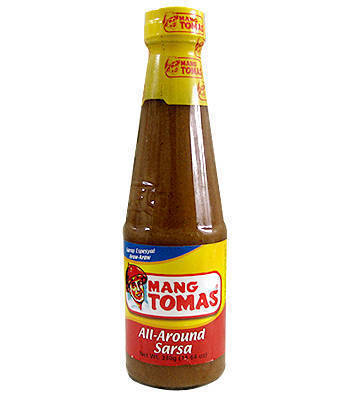
    Lechon sauce (sarsa


    Patismansi – fish sauce mixed with calamansi juice


    Shrimp paste (bagoong alamang)  


    Soy sauce (toyo)


    Sweet chili sauce  


    Tomato (kamatis) fresh chopped; also salted and boiled in water to make something akin to and used like tomato water 


    Toyomansi – soy sauce mixed with calamansi juice  


    Vinegar (suka) – those found in Filipino markets are usually a product of sugar cane but some are also derived from coconut; it's often mixed with chili, garlic, and possibly other spices and herbs to make spiced vinegar (sinamak) or combined with chili, garlic, soy sauce, fish sauce or some combination thereof to make a dipping sauce (sawsawan) at the dining table 


    Wednesday, October 24, 2012

    10 Unique Things of the Philippines CLICK here to see them. Now you know my favorites. What are yours?

    10 Unique Things  of the Philippines

    1. The People -=- Generally, Filipino people will go out of their way to help a stranger or a visitor. Yes this is not always the case and certain areas are to be avoided but I have experienced incredible service in shops and restaurants there.

    2. The Weather -=- Despite hating the high humidity, I also love it.  I prefer it so much more than shoveling snow.

    3. The Food -=- I enjoy most of the traditional Filipino foods, with only a few exceptions.

    Lechon Manok (roast Chicken on a spit) is one of my favorites.

    Filipino baked goods are yummy yummy-yummy too.  I am happy to try anything and have yet to come across something baked I dislike. Also, the Filipino spin on western food is quite nice too, Fried Chicken with Rice and Gravy is very popular in the Philippines and I can see why.

    Spaghetti sauce is sweet but still tomato based and very nice... Sarap-Sarap :-)))

    4. The Laid back Attitude -=- This also makes for Filipino Time which is something I dislike.

    There is nothing like sitting down with a group of Filipino's and simply relaxing is something we all should do.

    5. The Scenery -=- If you have never been to the Philippines it has some of the most amazing scenery.  I could go on and on and on about all the wonderful things to see and do in the Philippines.

    6. The Family and Friend Orientations -=- Despite the fact that Filipinos in the USA do not seem to unite for a common goal, in the Philippines it is very different and families work together.

    Distant relatives who have made a lot of money will sponsor a cousin or similar to go to college or some other course to better themselves.

    Overseas workers pay for the education of one or more relatives back home and this attitude carries on with a "Pay It Forward" kind of attitude.

    Neighbors remain friends and will always ask about how they are doing and regularly meet up for meals and drinks. Something lacking in the USA.

    7. Meal Time -=- Meal are a family gathering where everyone comes together around the table and food is family style.  Food is put in the middle of the table for people to scoop up what they want.  Pleasant conversations are as much a part of the ritual of meal times as is the food.  While growing up in Pennsylvania this was a regular practice.  Unfortunately in the USA this is something we as a nation have moved away from yet the practice is alive and well in the Philippines.  In the USA we should strive to return back to this instead of the current TV dinner type of experience!

    8. The Prices -=- I can have a quick yummy meal for just a few US dollars!

    As a gift I bought a friends daughter a baby walker and it costs about a third of what a similar unit in the USA would cost.

    Drinks cost very little too.  And, for a westerner this gives us a few extra pesos for tips which makes us seem nicer in the eyes of those serving us.

    9. Twelve Hours of Sunlight -=- Being near the equator there is roughly 12 hours of sunlight every day.

    This makes for a graceful awakening some time before 6am and you quickly adapt to waking and sleeping naturally and not relying on alarm clocks.

    And of course 12 hours of Sunlight means you have plenty of time to enjoy whatever it is yo plan to do that day!

    10. Love of Music -=- Every Filipino loves music and makes time to listen to music every day (or at least every Filipino that I know does).

    So on my daily travels I will hear music in the malls, coming out of bakeries, stores, tricycles, jeepneys, cars and trucks. Basically you hear music anywhere you go in the Philippines.

    Now you heard my ten things.  What are yours?


    ====

    If you like this and other Filipino related topics, food,  humor and videos be sure to visit us on Facebook at Dr. Dave's Filipino Scene.

    Dr. Dave's Filipino Scene promotes cultural diversity of Filipinos around the world uniting them thru humor, fun, food & traditions.  Hope  you visit our new Fan page.

    Here is a link to visit us:  (You may need to copy and paste this link into your browser)

    http://www.facebook.com/pages/Dr-Daves-Filipino-Scene/159834104096974

    Be sure to tell your friends.  We hope to see you there.

    Salamat:-)))

    -=-Dr. Dave-=
    .

    Tuesday, October 23, 2012

    How many Exotic Foods of the Philippines do you eat? I have eaten all but two on this list... (Click) to see the pics

    I have eaten all but two on this list... How many of these Exotic Foods of the Philippines do you eat? (Click) to see the pics

    Every country has their share of exotic foods served on the table with some even known as the country's specialty. The Philippines is no different.  Here are a few of those I found.

    There are so many Filipino exotic foods that are truly unique and delicious.  Below you will find some of the many Filipino exotic foods.

    Some of them have a strange appearance and look weird.  There are some people that dive right in and eat them while others find them not acceptable or not appropriate to eat. Personally, I fall somewhere in between.

    That being said... If you follow the adage "don't judge the book by its cover", then you will able to eat each of these without hesitation.

    This saying really applies to unique exotic foods of the Philippines.  I have eaten all but two on the following list.  And for me most of it was overcoming the mental challenge involved in getting it into my mouth.  And "YES," I ate the balut.

    BALUT


    Balut is a fertilized duck (or chicken) egg with a nearly-developed embryo inside that is boiled and eaten in the shell.

    Balut eggs are believed to be an aphrodisiac and considered a high-protein, hearty snack.

    Balut is sold primarily by street vendors in the regions where they are available.


    SOUP NUMBER 5


    Soup Number Five, is a soup made from bull's testicles or penis.

    Like balut, it is believed to have aphrodisiac tendencies that makes people say it is better than spending money on Viagra..

    GINATAANG KUHOL


    The French call "kuhol" by the name  "escargot". Kuhol or escargot is an edible snail. Guinataang Kuhol is a favorite appetizer in Filipino restaurants. It is also a popular pica-pica (finger food) that goes well with cold beer. Ginataang kuhol is a spicy dish.


     DINUGUAN


    Dinuguan is a Filipino savory stew of blood and meat (typically stomach, intestines, ears, heart and snout) simmered in a rich, spicy dark gravy of pig blood, garlic, chili , and vinegar.

    TAMILOK


    In Palawan and Aklan in the Philippines, the woodworm is called tamilok  and it is eaten as a delicacy there.

    Tamilok is prepared as kinilaw—that is, raw (cleaned) but marinaded with vinegar or lime juice, chopped chili peppers and onions, a process very similar to ceviche. The taste and texture has been compared to oysters and clams.


    ====

    If you like this and other Filipino related topics, food,  humor and videos be sure to visit us on Facebook at Dr. Dave's Filipino Scene.

    Dr. Dave's Filipino Scene promotes cultural diversity of Filipinos around the world uniting them thru humor, fun, food & traditions.  Hope  you visit our new Fan page.

    Here is a link to visit us:  (You may need to copy and paste this link into your browser)

    http://www.facebook.com/pages/Dr-Daves-Filipino-Scene/159834104096974

    Be sure to tell your friends.  We hope to see you there.

    Salamat:-)))

    -=-Dr. Dave-=
    .